If you have searched for a "digital marketing course Leamington Spa", you probably run a local business in this Warwickshire town, a salon, a clinic, a café, and you want to learn marketing yourself instead of handing it all to an agency. Here is the honest truth: most of the courses you will find are built for people chasing marketing jobs, not for owners with a till to run. You do not need a diploma. You need seven practical skills, learned in the right order, applied to your own business. This guide is that starter curriculum, the free version. No course to buy, because we do not sell one.
TL;DR, your free starter curriculum
- Most digital marketing courses teach jobseekers, not owners.
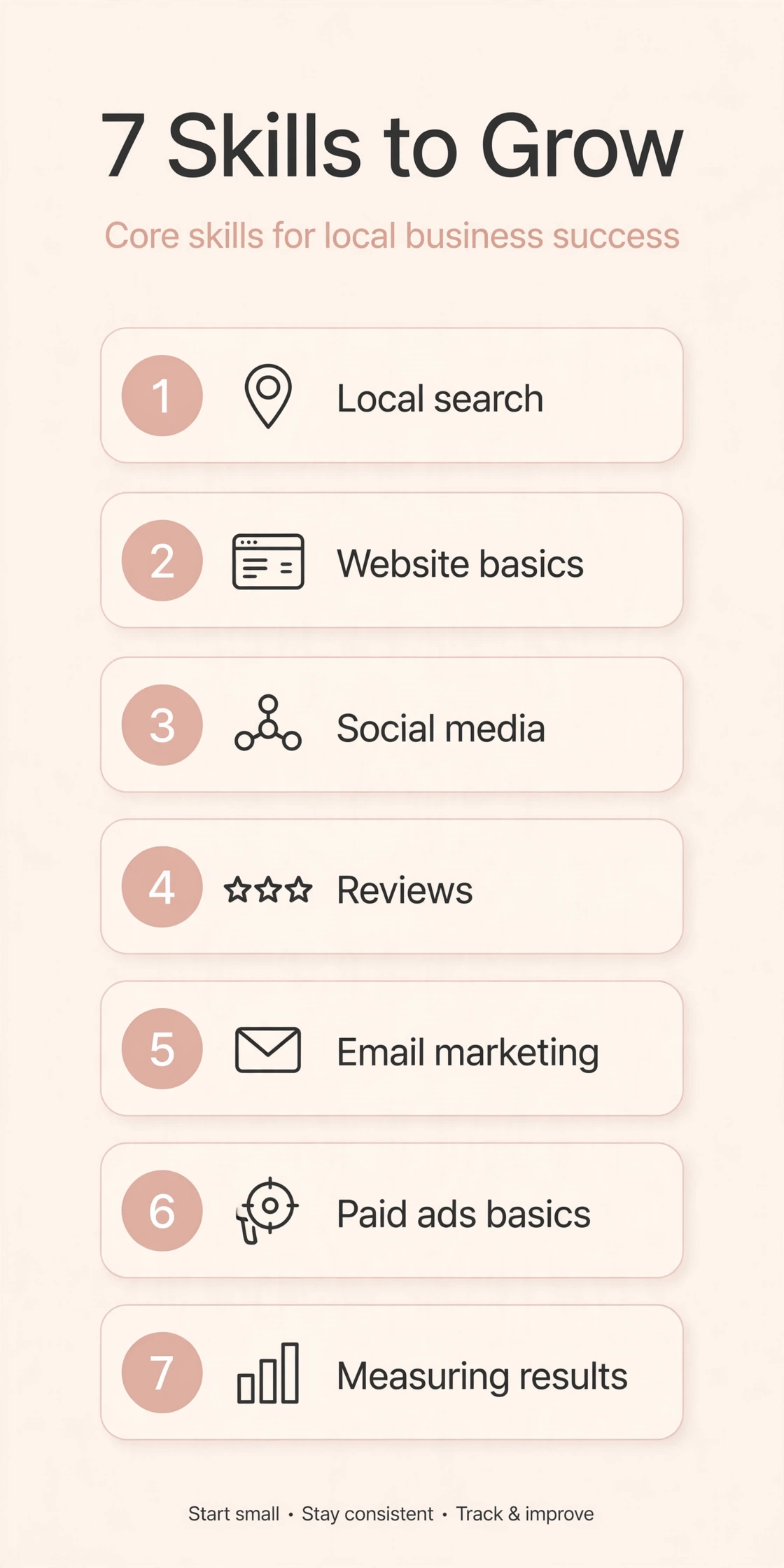
- Learn 7 skills in this order: local search, website basics, social media, reviews, email/SMS, paid ads basics, measuring results.
- Start free with Google Skillshop, Meta Blueprint and the ICO’s free UK guidance, quality material costs nothing.
- Follow the 30-day plan below (about 45 minutes a day) and you will learn by doing, not by watching videos.
- Skip the rest until these seven work. The checklist below shows how to judge any paid course later.
Working through this and unsure where you stand? Book a free 30-minute strategy call, we will look at your current marketing and tell you which skill to learn first.

Why most digital marketing courses are not built for owners like you
Search the phrase and you will mostly find course marketplaces listing hundreds of qualification-style courses, diplomas, CPD certificates, "marketing professional training", with short online courses listed around £15 to £46 on reed.co.uk. They are designed to get someone a marketing job. Their syllabus covers marketing theory, consumer behaviour and strategy frameworks.
None of that fills your appointment book next week.
An owner needs fewer skills, in a ruthless order, each applied to their own business the same day:
| What career courses teach | What actually moves the till for a local business |
|---|---|
| Marketing theory and frameworks | A finished Google Business Profile with prices and reviews |
| Consumer behaviour models | Instagram content that shows real work and how to book |
| Campaign strategy for big brands | One monthly email to past clients (sent legally) |
| Analytics dashboards | Three numbers: where bookings came from, what each cost, who rebooked |
If a course syllabus does not mention Google Business Profile, reviews and UK consent rules, it was not written for you.
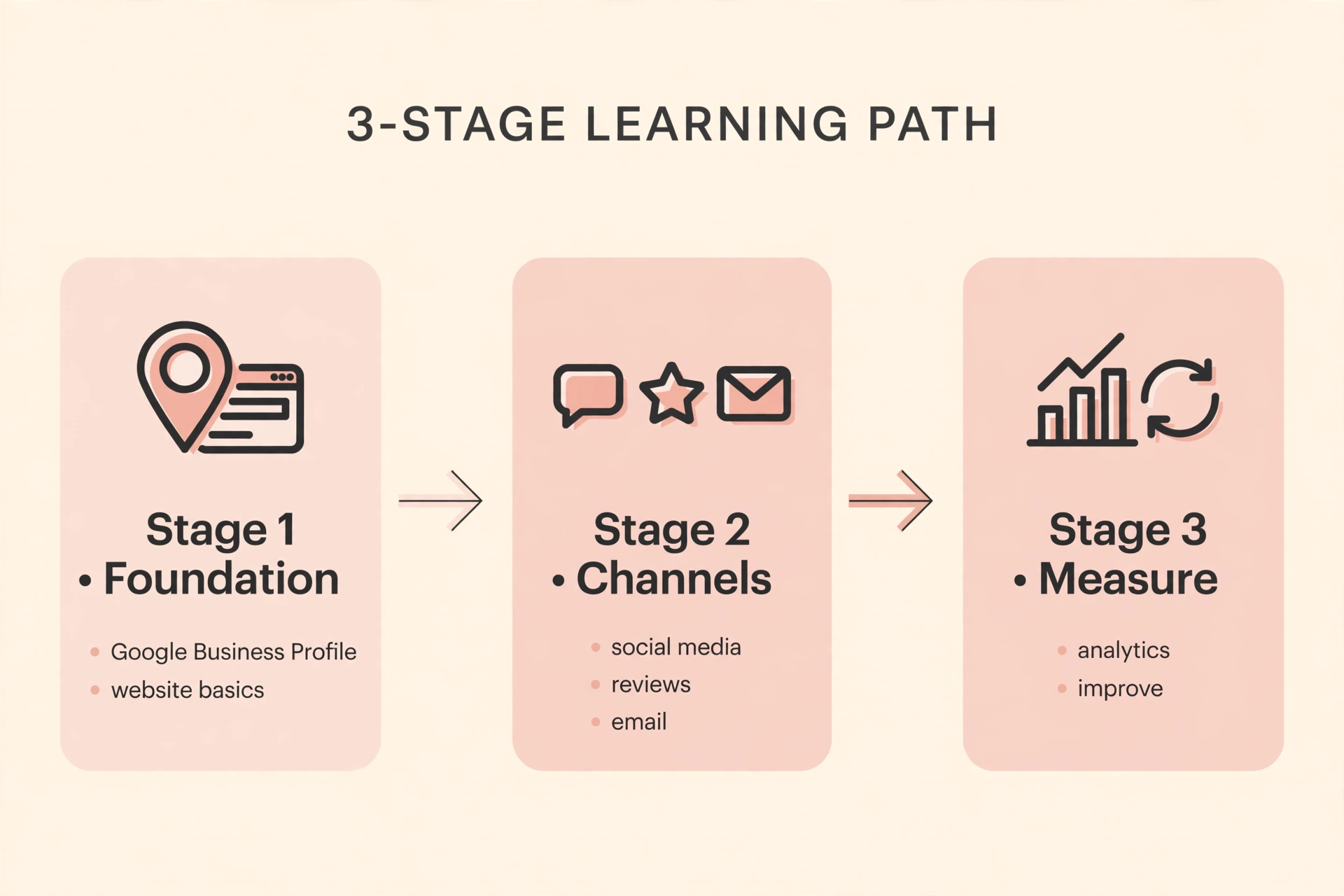
The 7 skills to learn, in this order
Each skill below: what to learn, where to learn it free, how long it takes. Do them in order, skill 3 without skill 1 is decoration.
1. Local search: your Google Business Profile
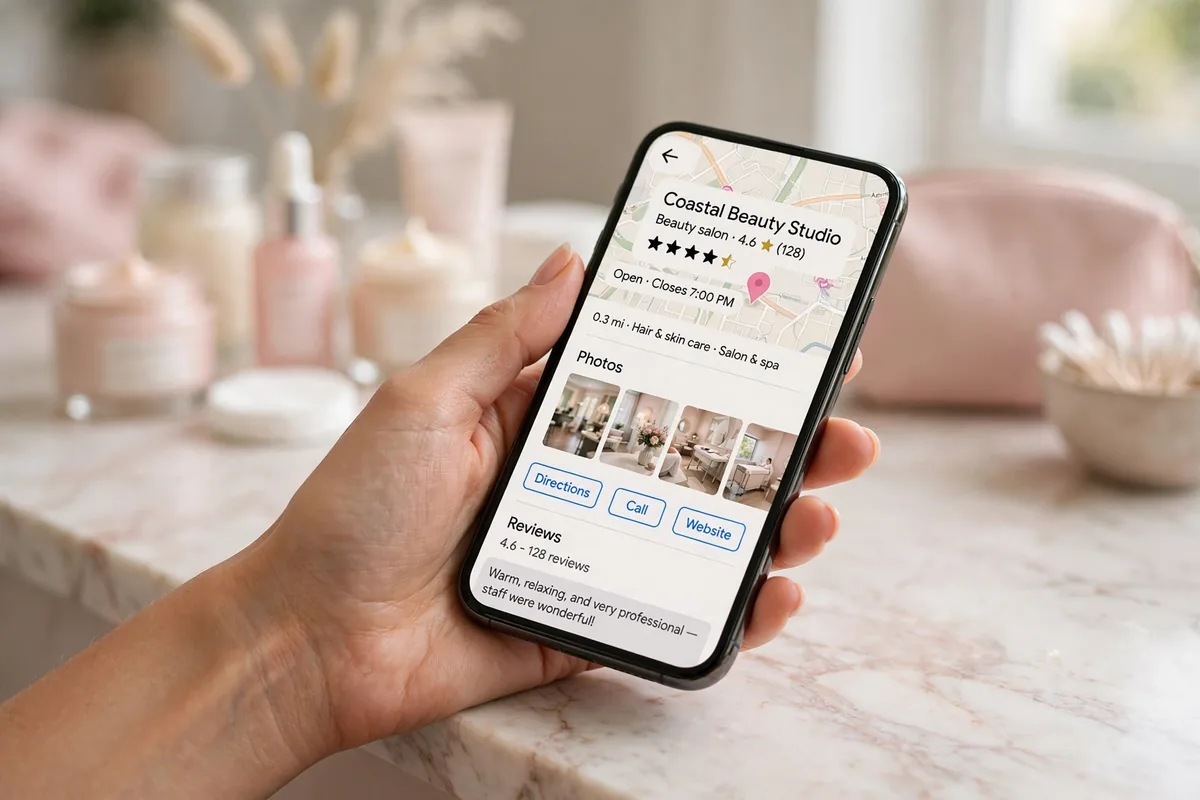
When someone in Leamington Spa searches "hair salon near me" or "facial Warwickshire", your Google Business Profile is what they see first, before your website, before your Instagram. This single free listing is the highest-leverage thing a local business owner can learn.
What to learn: claiming and verifying, the most specific category, services with prices, real photos, updates, and replying to every review, Google’s own Business Profile help pages cover all of it, free. One focused hour sets it up; ten minutes a week keeps it alive.
The first thing we check with any business is this profile. If it is half-finished, every other marketing effort works half as well.
2. Website basics that turn visitors into bookings
You do not need to learn web design. You need to learn what a good local business website looks like, so you can brief someone, or judge the site you already have.
What to learn: the five things that matter on mobile, your services, your prices, your location (a page that naturally mentions Royal Leamington Spa), a booking button above the fold, and fast loading. Open your own site on your phone: if a stranger cannot book within 60 seconds, that is your first project. An afternoon comparing admired competitors’ sites teaches the rest.
3. Social media: one platform, done well
Owners drown here because courses teach five platforms. Learn one. For beauty, hair and aesthetics businesses that is usually Instagram; for community-driven local businesses, Facebook. The skills transfer once one platform works.
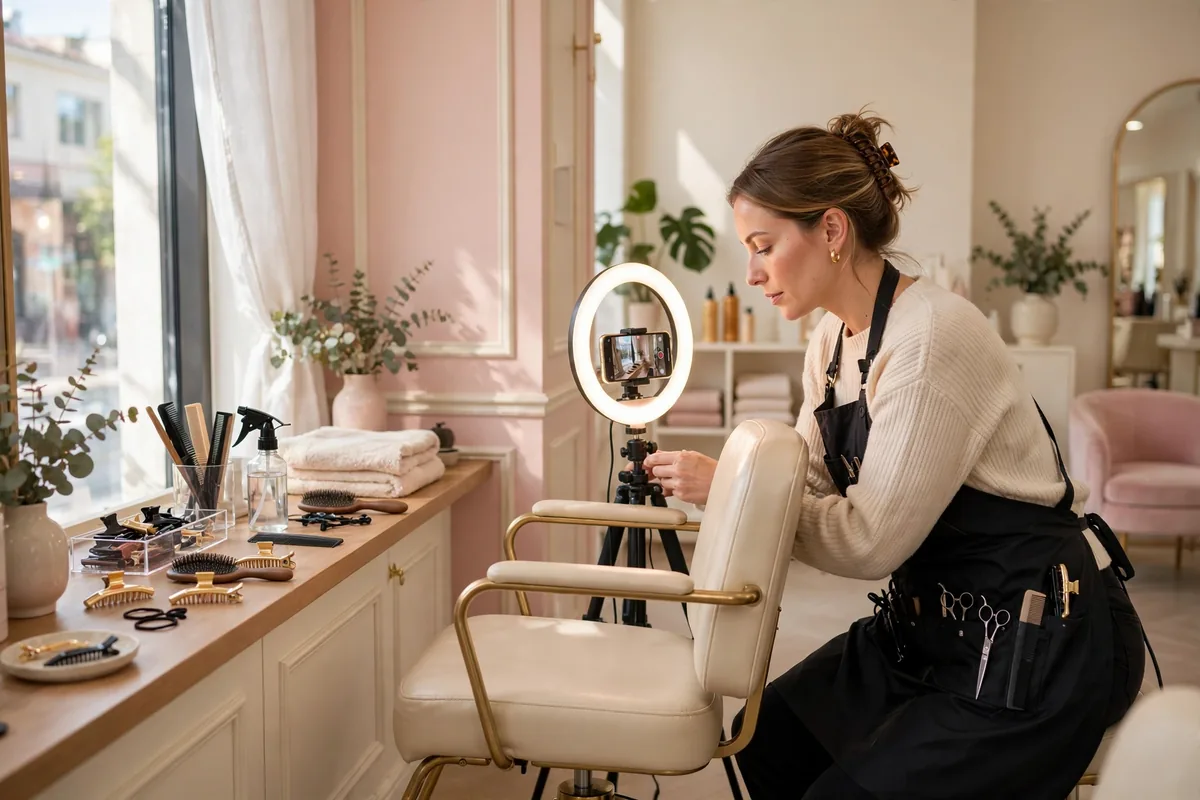
What to learn: an optimised bio (what, where, how to book), three content pillars (your work, your expertise, your personality), short Reels answering client questions, daily Stories, and DMs treated as a sales channel. Meta’s free Blueprint training covers the platform mechanics; the content ideas come from your treatment room, not a course.
Practical rhythm: three posts a week beats daily posting for a month then silence.
4. Reviews and reputation
Reviews are the closest thing to free advertising that exists, and learning to generate them is a skill, not luck.
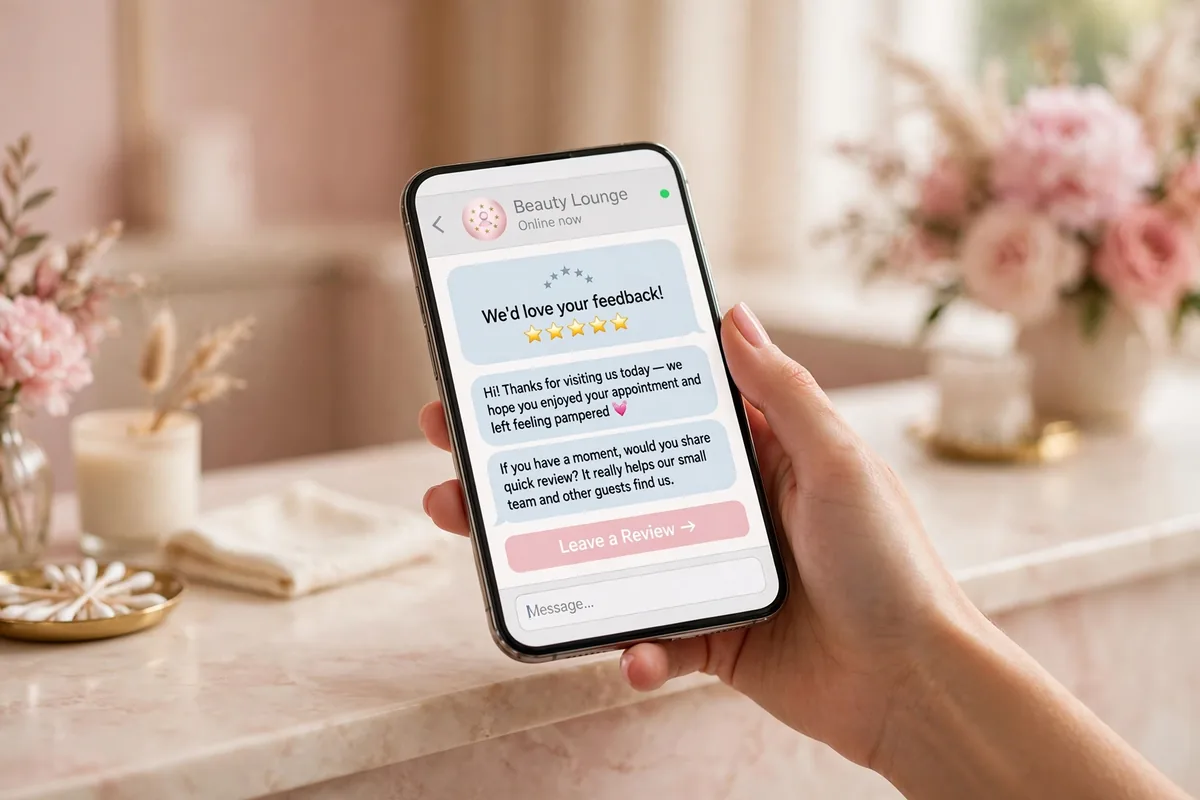
What to learn: asking at the right moment (within 24 hours of a great appointment, in person and by text), making it effortless (a direct Google review link), replying to every review within 48 hours, and handling bad reviews publicly with grace, future clients read your replies more than the complaint. And the hard rule: never buy reviews or offer incentives for them. Google removes them and can penalise your listing; it is not worth it.
Thirty minutes to set up, five minutes a day, or our reputation management service handles the whole system for you.
5. Email and SMS: your cheapest channel
Your client list is an asset most local businesses sit on and never use. Learning email marketing means learning list-building with proper consent, one useful message a month, and a simple welcome email for new clients.
Under PECR, the UK’s electronic marketing rules, you need consent (or the "soft opt-in" for existing customers) before sending marketing texts or emails, and every message must offer an opt-out. The ICO’s direct marketing guidance explains it in plain English, free, and more reliable than any course module. This is general information, not legal advice.
One email a month to 300 past clients will outperform most ad campaigns you could run at this stage.
6. Paid ads basics, and when to skip them
Every course teaches ads early because ads are exciting. Learn them sixth, and learn when not to use them first.
The honest rule: spend nothing on ads until skills 1 and 2 are finished and you can track a booking from click to diary. Running ads to a half-finished Google profile is paying to disappoint people faster.
Skipping ads entirely for your first 90 days is a legitimate strategy, not a failure.
7. Measuring: the three numbers that matter
Forget dashboards. Track three numbers once a month:
- Where did bookings come from? (ask at booking, or check Google Business Profile insights and Instagram insights)
- What did each booking cost? (ad spend divided by bookings from ads; £0 for organic)
- Who came back? (rebooking rate, the cheapest growth there is)
Ten minutes a month on these three beats any analytics course: double down on the cheapest bookings, fix or drop the rest.

What you can learn for free (start here, spend nothing)
Before you pay for any digital marketing course, Leamington Spa or anywhere, work through the free material from the platforms themselves. It is usually better than paid courses:
- Google Skillshop, free courses from Google, including the fundamentals of digital marketing and Google Business Profile training.
- Meta Blueprint, free training on Instagram and Facebook marketing, including ads when you are ready for skill 6.
- ICO guidance, free, plain-English UK rules on marketing emails, texts and data, so you stay on the right side of PECR and GDPR.
- This guide, the curriculum and the 30-day plan below, which no course marketplace gives you.
A paid course earns its price only through structure, accountability and feedback on your business from a real tutor.
How to judge a paid digital marketing course: the 5-point checklist
If you do decide to pay, run every course through this before you enter card details:
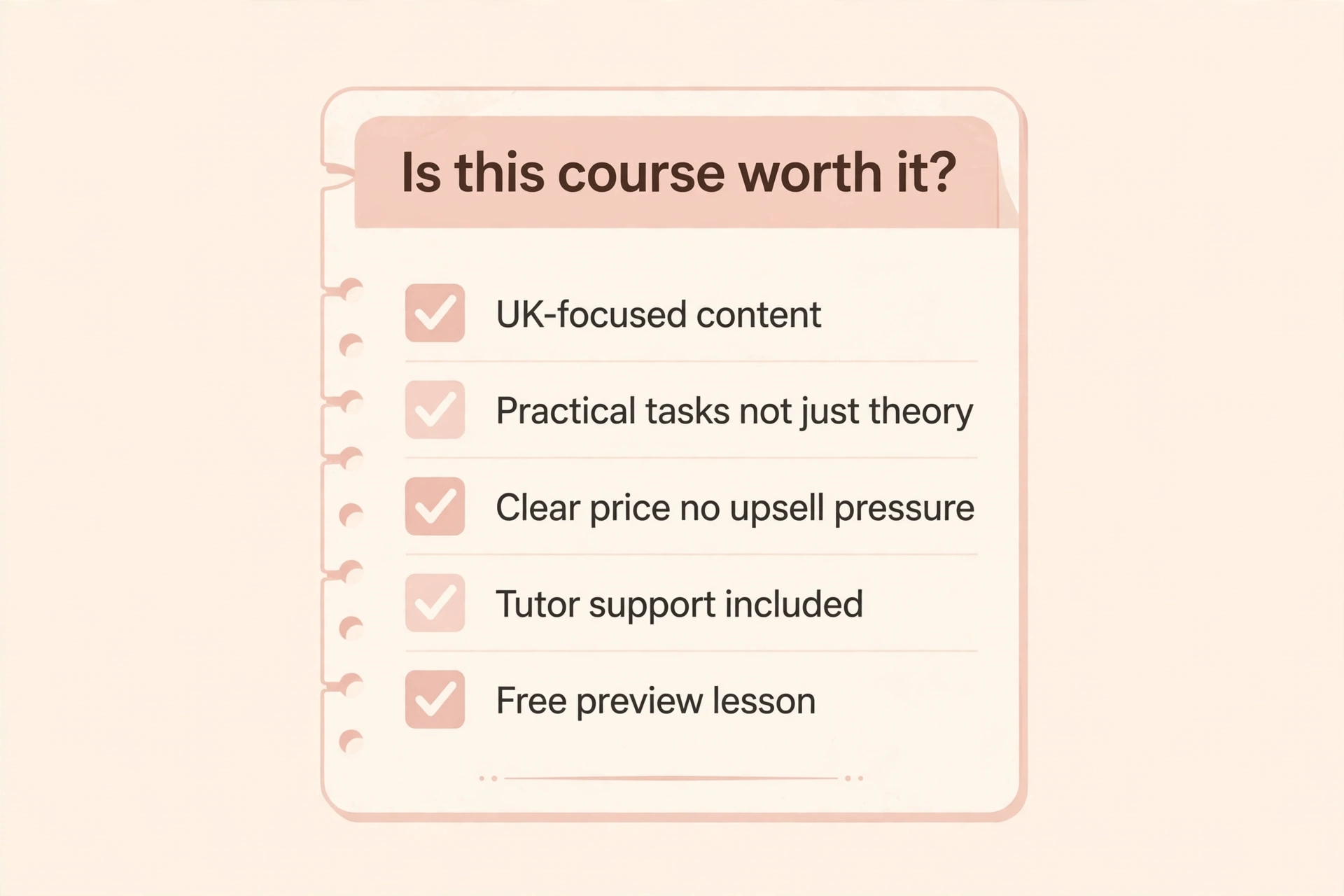
- UK-focused content. The syllabus should mention PECR/GDPR, ASA advertising rules and £ pricing. A course teaching US email tactics and dollar examples will teach you things that are wrong, or illegal, here.
- Practical tasks on your business, not just videos. Every module should end with you doing something to your own Google profile, website or content, not a quiz.
- A clear price with no upsell pressure. If the £15 course exists to sell you the £1,500 mastermind on a countdown timer, the course is the advert.
- Real tutor support. A named human who answers questions beats a video library. Check reviews of the *support*, not just the content.
- A free preview. Any course worth paying for lets you watch a real lesson first. Refusal is a red flag.
Red flags that end the conversation: income promises ("make six figures"), no named tutor anywhere, "lifetime access" urgency timers, and testimonials with no verifiable business attached.
Your free 30-day starter plan (the course, done by doing)
This is the practical half of the curriculum, about 45 minutes a day, learning each skill on your own business:
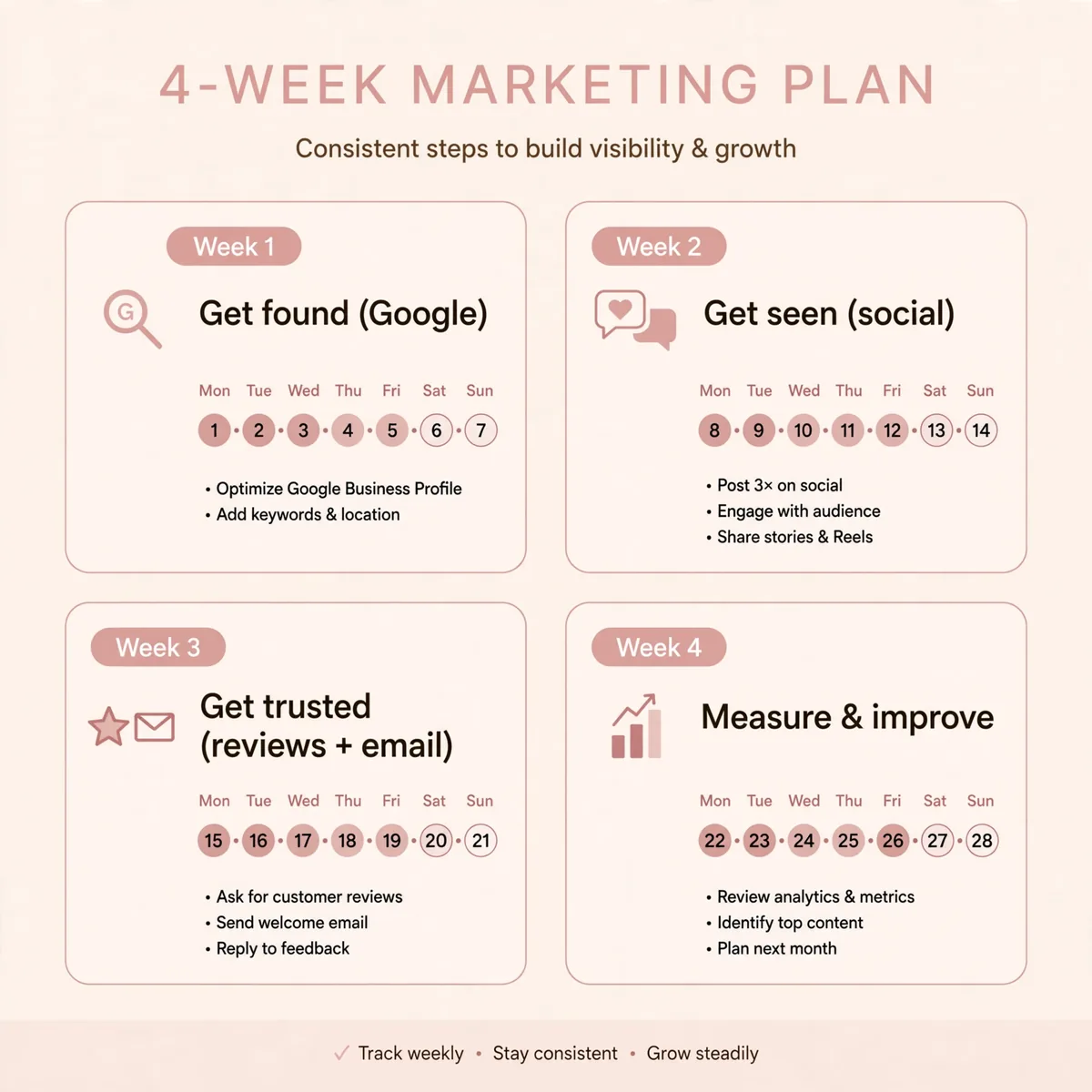
- Week 1, Get found (skills 1 to 2). Claim, verify and complete your Google Business Profile: category, services with prices, 10+ real photos, opening hours. Open your website on your phone and list everything that would stop a stranger booking in 60 seconds.
- Week 2, Get seen (skill 3). Pick one social platform. Optimise the bio (what, where, how to book). Post three times: your best work with the price, one 30-second Reel answering a client question, one behind-the-scenes Story.
- Week 3, Get trusted (skills 4 to 5). Text your ten happiest recent clients asking for a Google review (with the direct link). Reply to every existing review. Collect email consent at every booking and draft your first monthly email.
- Week 4, Measure (skill 7). Check your Google Business Profile insights and Instagram insights. Write down your three numbers. Decide what month two repeats and what it drops.
Finish this and every hour will have gone into your business, not a certificate.
📞 Turn learning into bookings faster
This plan works, but it works faster with a second pair of eyes on it. Book a free 30-minute strategy call and we will review what you have built so far and tell you exactly what to learn next.
Free, 30 minutes, no obligation. We reply within one working day.
5 mistakes owners make when learning marketing themselves
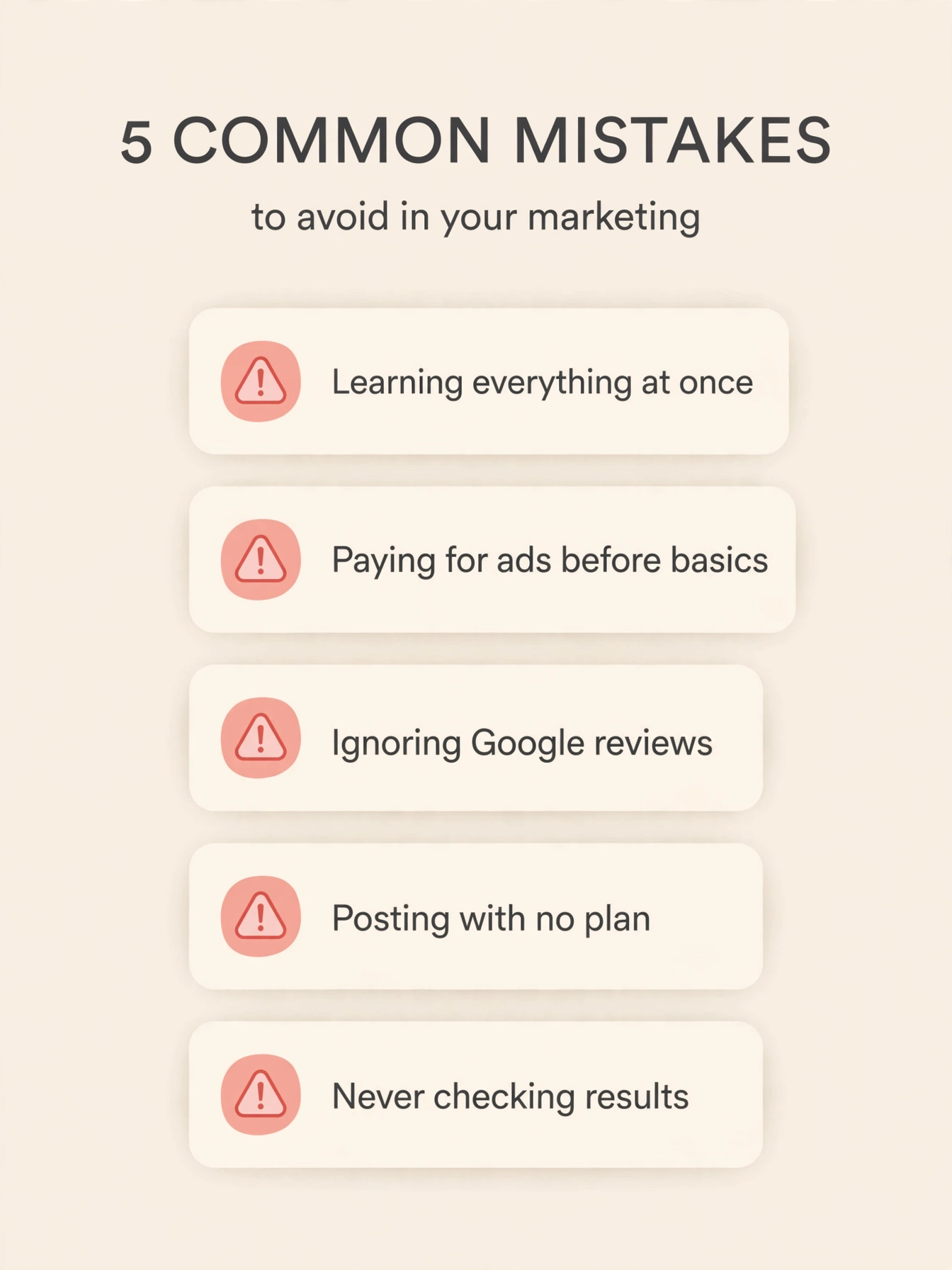
- Learning everything at once. Watching SEO videos while running ads while redesigning Instagram teaches nothing deeply. Finish one skill before opening the next tab.
- Paying for ads before the basics. Skills 1 and 2 first, always.
- Copying US tactics. American courses teach email and ad tactics that breach UK consent rules. If the advice never mentions PECR or the ASA, assume it was not written for you.
- Posting with no booking path. Every post, Reel and email needs a next step, a booking link, a DM prompt, a reply. Content without a path builds followers, not revenue.
- Never checking results. Ten minutes a month on your three numbers beats another six hours of course videos. What gets measured gets improved; what doesn’t gets repeated.
DIY or get help? An honest framework
Here is how to decide, honestly:
| Your situation | The honest answer |
|---|---|
| You have 4+ hours a week and enjoy learning | DIY the foundations with this guide; book a call when you want a sanity check |
| You have under 2 hours a week | Learn skills 1 and 4 yourself (highest return, least time), hand the rest to specialists |
| The technical bits (website, ad setup) defeat you | Get help, paying a specialist for a day beats a month of frustrated evenings |
| You have tried agencies before and been burned | Start DIY so you learn what good looks like; you will brief the next one ten times better |
Two things, plainly: we are a UK studio with no office in Leamington Spa, everything we do is online, for businesses anywhere in the UK. And we do not sell a marketing course; if DIY stops paying, our social media management and local SEO services take the ongoing work off your plate. For the deeper local-search playbook behind skill 1, see our guide to local SEO for salons.
Frequently asked questions
Can I learn digital marketing myself as a busy local business owner?
Yes, if you learn in the right order and keep it narrow. Most owners fail because they try to learn everything at once. Follow the seven skills above in order, spend 45 minutes a day for 30 days, and you will handle the foundations yourself. The technical work (website builds, ad management) is where getting help usually pays for itself. (60 words)
How long does it take to learn digital marketing for a small business?
The foundations, Google Business Profile, one social platform, reviews and one monthly email, take about 30 days at 45 minutes a day. Real confidence takes three to six months of doing it weekly. You do not need to "finish learning" before it starts working; skill 1 alone can bring new enquiries within weeks. (53 words)
Are free digital marketing courses worth it?
The free training from Google (Skillshop), Meta (Blueprint) and the ICO is genuinely good, it comes from the platforms themselves and covers the mechanics accurately. What free material lacks is structure for owners and feedback on your business. Use free resources for skills, and consider paying only for structure, accountability or tutor feedback. (53 words)
Do I need a digital marketing qualification to run ads for my own business?
No. No qualification is required to run Meta or Google ads for your own business in the UK. What you need is the practical knowledge: how targeting works, what a click should cost in your industry, and how to track a booking back to the ad. Learn skill 6 above before spending anything, the qualification would not teach you your own numbers. (62 words)
What is the first marketing skill a local business should learn?
Your Google Business Profile. It is free, it takes about an hour, and it puts you in front of people searching "near me" with buying intent right now. No other single skill delivers more enquiries per hour invested for a local business. Start there, then move to your website and one social platform. (53 words)
The bottom line
You came looking for a digital marketing course in Leamington Spa; here is our honest answer: skip the career diplomas, learn the seven skills in order, and do the 30-day plan on your own business. If you get stuck, book a free 30-minute strategy call, or get in touch if you prefer to write first.
Free, 30 minutes, no obligation. We reply within one working day.
Last updated: October 2026