Choosing beauty salon marketing software is harder than it should be. Every platform promises more bookings, every pricing page hides the real cost, and most tools were built for hair salons, not for beauty businesses with patch tests, aftercare follow-ups and treatment courses. This 2026 guide compares the beauty salon marketing tools UK owners actually use, booking platforms with marketing built in, plus the free tools that do half the job for nothing. No fake scores, no invented case studies: just an honest look at what each tool does well, what it costs, and the five automations worth switching on first.

TL;DR, the short answer
- Most UK beauty salons need one booking platform with marketing built in (Fresha, Phorest, SalonIQ, Treatwell or Vagaro) plus three free tools: Meta Business Suite, Canva and Google Business Profile.
- The tool must handle beauty-specific jobs: patch-test tracking, aftercare follow-ups, treatment courses and rebooking by treatment interval.
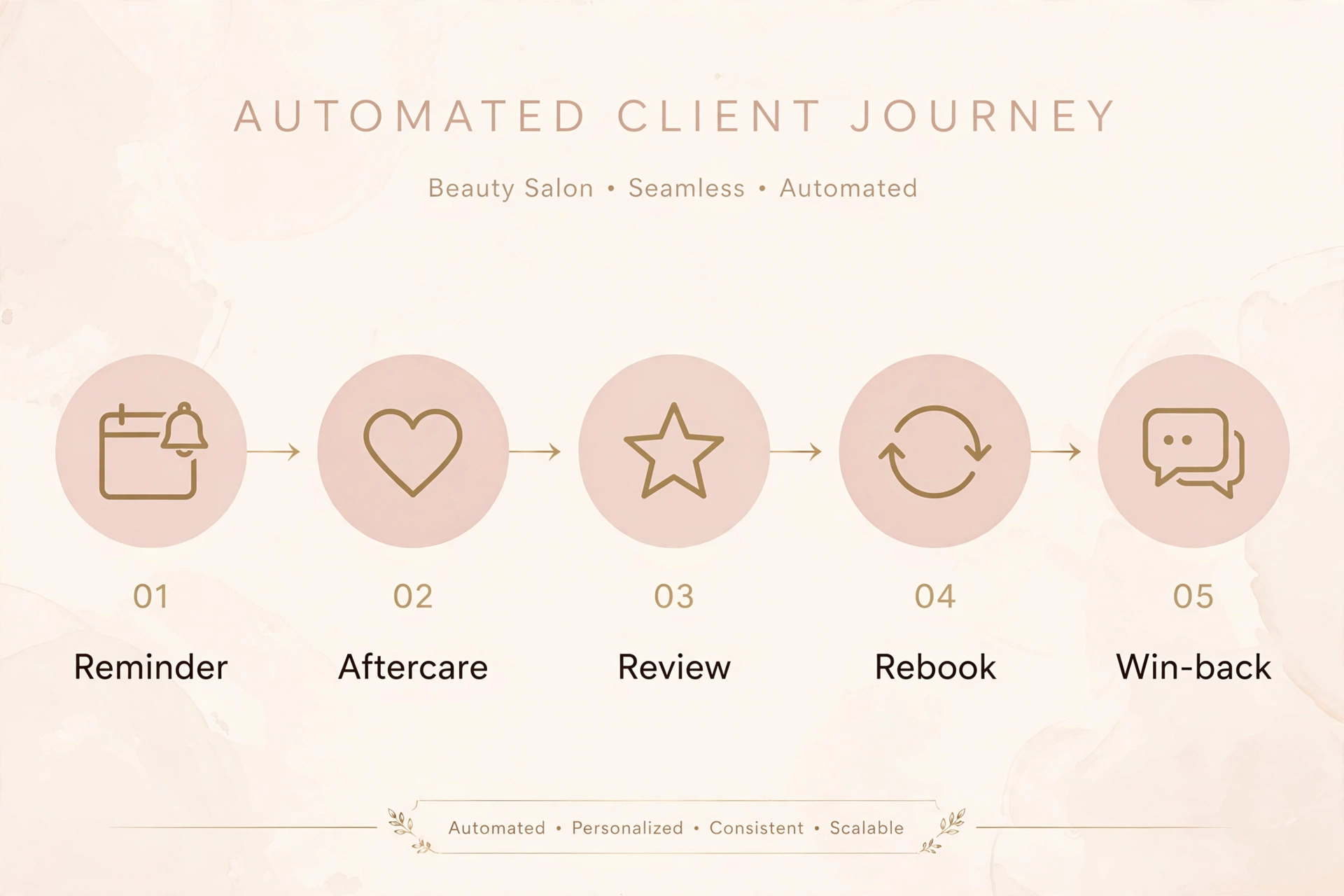
- The highest-value feature is automation: reminders, aftercare check-ins, review requests, rebooking nudges and win-backs that run without you.
- Judge every tool by one question: does it put more bookings in the diary than it costs you?
Choosing between tools? Book a free 30-minute strategy call, we will review your current setup and tell you what to keep, switch on, or cancel.
Why beauty salons need different software than hair salons
A hair salon sells appointments. A beauty salon sells treatments with consequences: tints that need patch tests, lash extensions that need aftercare, facials that need rebooking in six weeks, laser courses that run over months, and skincare retail. Beauty salon marketing tools have to handle all of that, a booking grid built for barbers simply will not.
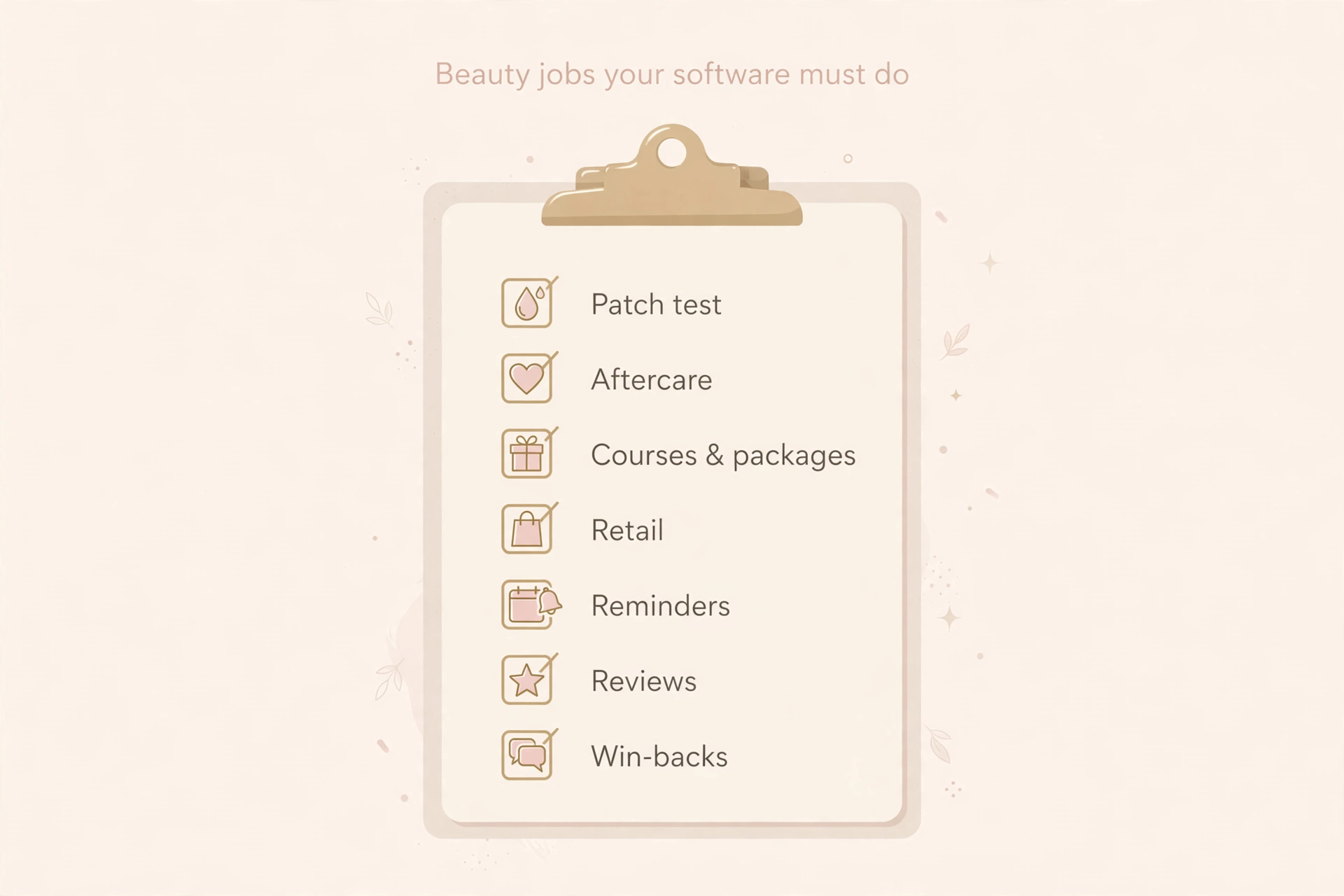
Before you compare a single platform, check it against the seven beauty jobs:
- Patch-test tracking, records who has had a valid patch test, and when it expires.
- Aftercare follow-up, automated check-in messages after treatments.
- Courses and packages, tracks remaining sessions on laser, facial or massage courses.
- Retail, prompts and records skincare product sales at checkout.
- Reminders and deposits, cuts no-shows on long, high-value treatment slots.
- Review requests, asks for reviews at the right moment, automatically.
- Win-backs and rebooking, nudges clients at their treatment’s natural interval.
If a platform cannot do these seven, it was not built for beauty, however glossy its marketing looks. This checklist is the buying criteria for everything that follows.
Beauty salon marketing software compared: the shortlist
These are the five platforms UK beauty owners actually choose between. No scores, just an honest "best for" on each, because the right tool depends on your business, not a review site’s ranking.
| Platform | In plain English | Marketing strengths | Best for |
|---|---|---|---|
| Fresha | Free-to-use booking platform, widely used by UK beauty salons and barbershops | Automated reminders, client messaging, marketplace discovery that puts you in front of new clients | Solo beauticians and salons keeping software costs at zero |
| Phorest | Irish company with a strong UK presence, built for established salons | Marketing suite built on live booking data, segments, automated email/SMS, review requests, loyalty programme | Established beauty salons focused on retention and loyalty |
| SalonIQ | UK-built platform used by over 2,500 salons and 180+ salon groups across the UK (saloniq.com) | Automated SMS and email campaigns, plus an AI receptionist that handles missed calls and enquiries 24/7 | Independents who want UK-based software and support |
| Treatwell | Booking software plus one of Europe’s largest beauty marketplaces | New-client discovery through the marketplace, with booking and reminders in the same system | Beauty salons that want discovery alongside booking |
| Vagaro | Polished all-rounder covering booking, marketing, payments and client communication in one place | Booking, marketing, payments and client communication in one place | Salons wanting a single polished system, check UK pricing and support fit |
An honest word on all five: none of them will market your business for you. The software is the engine; someone still has to switch the automations on and write the occasional campaign. Pick one platform and actually configure the reminders, aftercare messages and review requests, you will get more from it than from four disconnected tools you never fully set up.
Pricing honesty: Fresha’s core booking software is free, with paid add-ons, per-message SMS charges and marketplace booking fees, verify the current fee structure. SalonIQ publishes pricing from £47/month with no long-term contracts. The rest price by quote or tier, and marketing features often sit on different plans. Always verify current pricing on the vendor’s own site before you commit.
The aftercare automation most beauty salons never set up
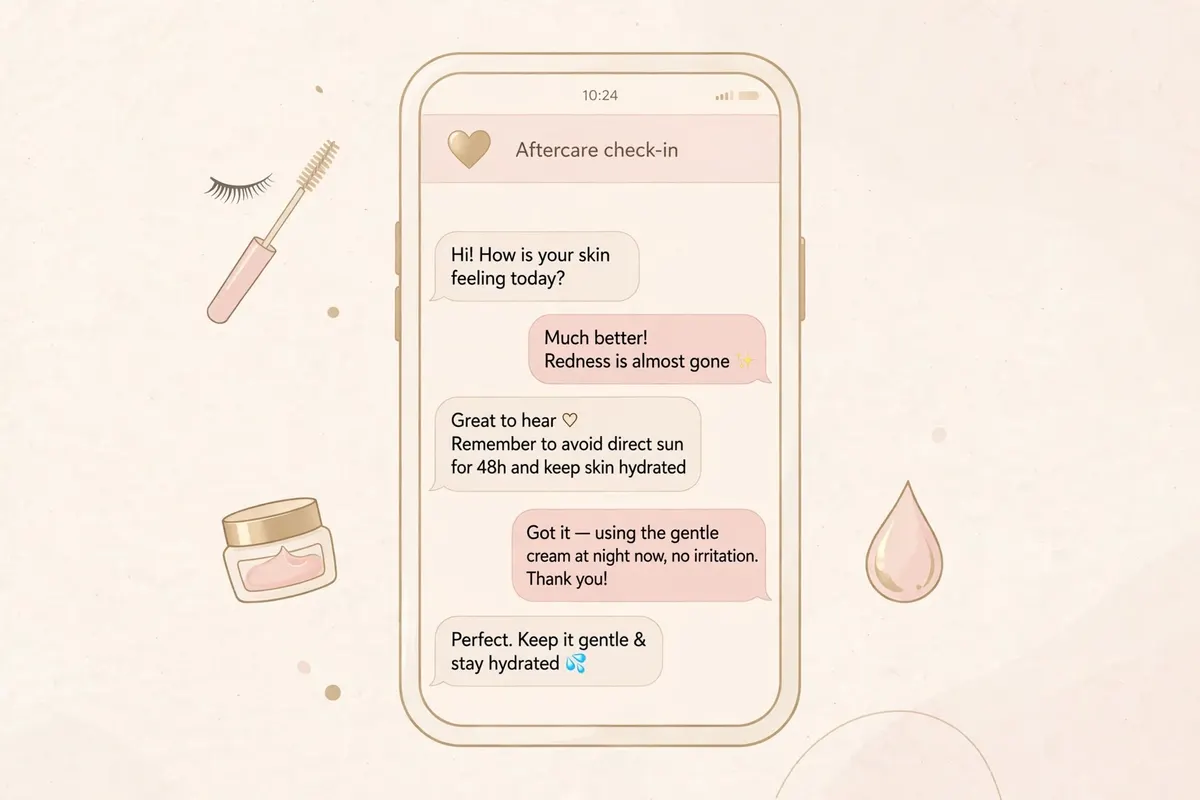
Here is where beauty software earns its money. Aftercare affects results: lash extensions, facials, waxing and tints all have a 24 to 48 hour window where the client needs guidance. An automated aftercare check-in, sent at the right moment without you lifting a finger, builds trust, catches problems early, and naturally leads to a review and a rebooking. This is salon marketing automation at its most useful.
Copy, paste and adapt these. Set each one to send 24 to 48 hours after the matching treatment:
Lash extensions (24 hours after): Hi [name], it’s [salon]. How are your lashes settling in? Quick tips: avoid water and steam for 24 hours and brush them gently each morning. Any concerns, just reply here and we’ll sort it.
Facial (48 hours after): Hi [name], it’s [salon]. Your skin may feel a little sensitive today, that’s completely normal. Keep it hydrated, skip strong actives for 48 hours and use SPF. Questions? Just reply.
Waxing (24 hours after): Hi [name], it’s [salon]. After your wax: no hot baths, saunas or fake tan for 24 hours. A little redness is normal. Reply here if anything worries you.
Brow or lash tint (48 hours after): Hi [name], it’s [salon]. Your tint should be settling nicely. Avoid oil-based cleansers around the area to keep the colour lasting. Happy with the result? A quick Google review would mean a lot: [link].
Keep these as care messages, not medical advice, if a client reports a real reaction, invite them in rather than diagnosing by text.
📞 Paying for tools you barely use?
Book a free 30-minute strategy call and we will review your current toolkit, what to keep, what to switch on, and what to cancel. We will also map the five automations worth setting up first.
Free, 30 minutes, no obligation. We reply within one working day.
Booking for treatments: patch tests, deposits and courses
Three beauty-specific booking problems that generic software gets wrong:
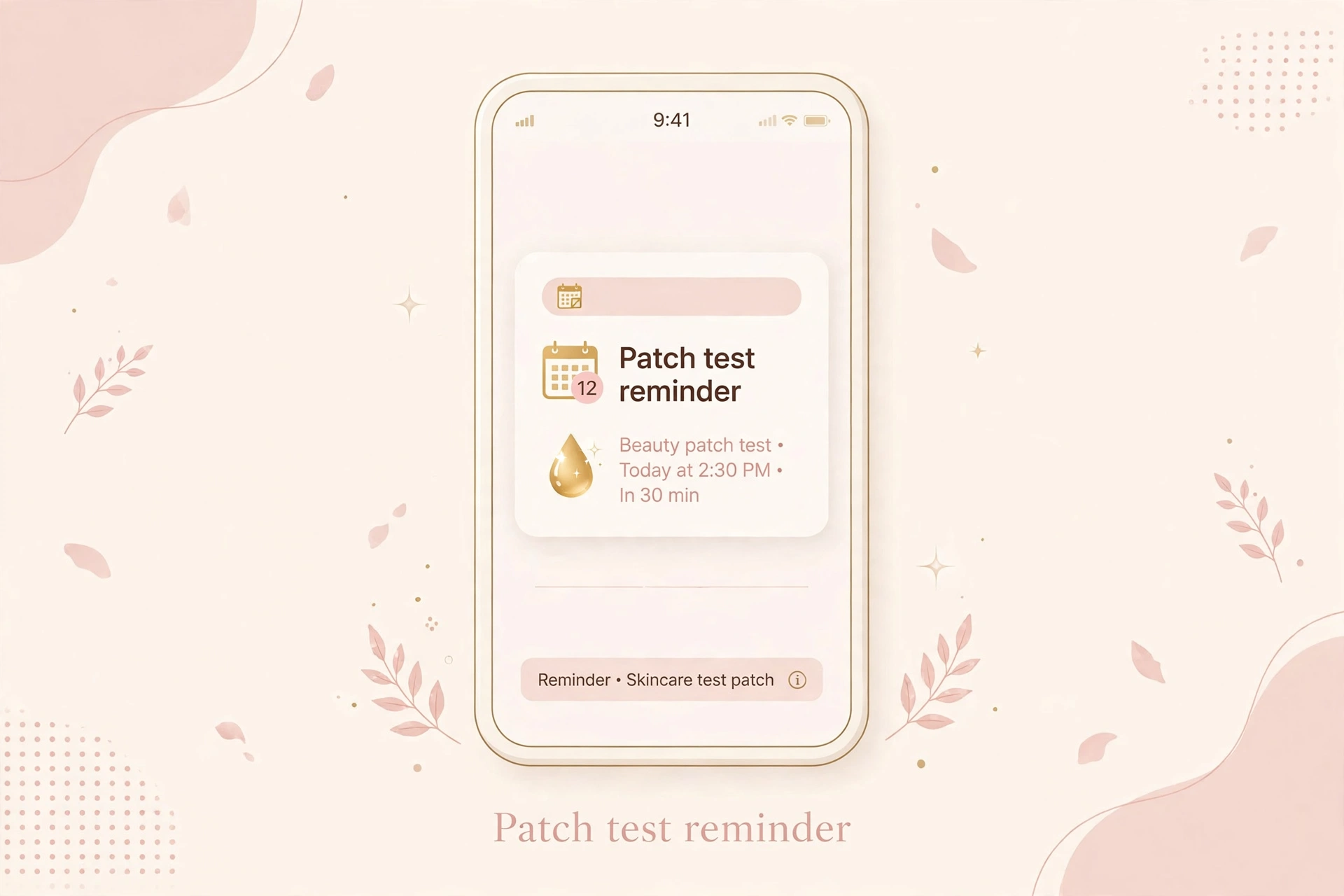
Patch tests. Brow and lash tints, and many lash lift systems, need a patch test 24 to 48 hours before the treatment. It is industry standard, and most insurers expect it. Good beauty software records the patch test on the client record and can block the treatment booking until a valid test exists, plus send an automatic patch-test reminder. If yours cannot do this, you are tracking it on paper, and paper gets forgotten.
Deposits and reminders. Beauty no-shows hurt more than hair no-shows, because treatment slots are longer and worth more. Fresha’s 2026 research, reported by Hairdressers Journal, found salon owners aged 35 to 44 lose an average of 8% of monthly revenue to cancellations and no-shows, on a £12,000 monthly turnover, that is £960 walking out the door (HJI). Automated reminders 24 to 48 hours before, plus a deposit policy on high-value treatments, are the fix. Make sure your tool supports both.
Courses. Laser hair removal, skin programmes and massage courses run over months. Your software should track remaining sessions, prompt rebooking at the right interval ("session 3 of 6 is due"), and flag lapsed course clients. This is pure retention revenue that paper records leak.
Example (illustrative, not a client result): imagine a beauty salon with 100 appointments a month at an average of £55. If 6 of those are no-shows, that is £330 lost. Automated reminders that halve the no-show rate save £165 a month, more than most paid platforms cost. Run your own numbers; the maths usually favours switching the reminders on.
Content and review tools that win you the treatment
Beauty is visual, and your content tools do not need to cost anything. Two free tools cover most beauty salons:
- Meta Business Suite, schedule a week of Instagram and Facebook posts in one sitting, free. Batch your content on a quiet Monday and the week posts itself.
- Canva, free tier templates for before-and-afters, treatment menus, seasonal offers and Stories. Keep one brand template for each post type so everything looks consistent.
One system that works: film two short Reels a week answering questions clients already ask ("how long does a lash lift take?", "what happens at a facial consultation?"), design the cover frames in Canva, and schedule everything in Meta Business Suite. If creating this every week feels like a second job, our social media management for beauty salons exists for exactly that.

But content only wins the click, reviews win the treatment. Beauty clients trust strangers with their face, so they read reviews before they book. The two review tools that matter:
- Google Business Profile, free, and the reviews that show on Google Maps when someone searches "lash lift near me" or "facial in [town]". Claim it, complete it, and reply to every review, this is the foundation of local SEO for salons. Google’s official Business Profile help page walks through setup. For the full DIY walkthrough, see our guide to local SEO for salons.
- Your booking platform’s built-in review requests, a text with your Google review link, sent an hour or two after checkout. This is how review counts compound month after month.
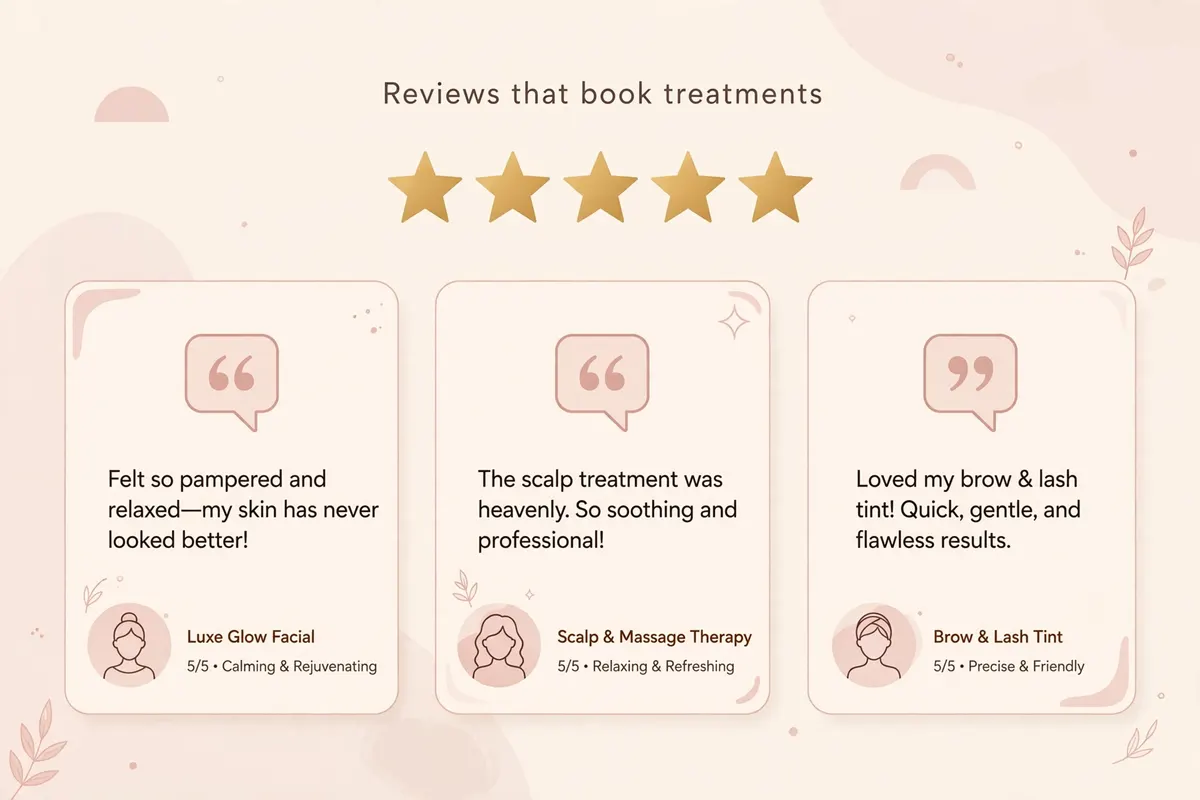
Marketplace platforms like Fresha and Treatwell carry their own review systems too, worth encouraging, but Google reviews are the ones that show up in search.
Treatment-specific reviews book treatments. "Best lash lift in Leeds" in a review beats a generic five stars, so when you reply to reviews, mention the treatment by name. If reviews are the part you never get round to, our reputation management for beauty businesses handles the whole system.
Do you need a separate email tool on top of your booking software?
Mailchimp is the best-known email marketing tool: easy templates, a free plan for small contact lists, and simple automations for welcome emails. Brevo is the budget alternative worth knowing, email plus SMS with a usable free tier.
The honest catch: neither knows who just booked, who lapsed, or what a client spent. That data lives in your booking system. So you are either exporting lists by hand or running campaigns half-blind, which is exactly the problem the all-in-one platforms above were built to solve.
Ask this before paying: if your booking platform already sends automated reminders, aftercare messages, win-backs and review requests, do you need a separate email tool at all? For most small beauty salons, the answer is no. One proper monthly newsletter is the only real gap, and even that can wait until your list is a few hundred engaged contacts, not fifty email addresses collected at reception.
The consent rule that covers every tool on this page: under PECR, the UK’s electronic marketing rules, you need proper consent (or the "soft opt-in" for existing customers) before sending marketing emails or texts, and every message must offer an opt-out. Your software should let you record consent and honour unsubscribes, if it cannot, do not use it for marketing. The ICO’s direct marketing guidance explains it plainly. This is general information, not legal advice.
What does it actually cost?
| Tool | What you pay (as advertised, October 2026) | Watch out for |
|---|---|---|
| Fresha | Free core booking software | Paid add-ons, per-message SMS charges, marketplace booking fees, verify the current fee structure |
| SalonIQ | From £47/month, no long-term contracts (saloniq.com) | Check which marketing features sit in which tier |
| Phorest | Quote-based | Ask exactly what is included at your tier, reminders, campaigns and loyalty are often on different plans |
| Treatwell | Marketplace commission plus software fees | Commission applies to marketplace bookings, verify before you sign |
| Vagaro | Paid monthly plans | Check UK pricing and support fit |
| Mailchimp / Brevo | Free tiers for small contact lists | Costs rise as your list grows |
| Meta Business Suite, Canva (free tier), Google Business Profile | Free |
Pricing changes, and quote-based pricing changes fastest. Verify on the vendor’s own site before you commit, and ask exactly which marketing features are included at your tier, because reminders, win-backs and campaign tools are often sold separately.
Which combination fits your beauty business?
Do not buy the tool before knowing which job is broken. Pick your row:
| Your beauty business | The combination to start with |
|---|---|
| Solo beautician or beauty room | Fresha (free) + Meta Business Suite + Canva + Google Business Profile |
| Small beauty salon, 2 to 5 therapists | One booking platform with marketing built in (Fresha or SalonIQ) + the five automations from this guide switched on |
| Established multi-room salon, courses and retail | Phorest or SalonIQ for retention marketing + a standalone email tool only once your list is a few hundred engaged contacts |
A final honest note: software amplifies what you switch on. It will not fix a half-finished Google profile or write your aftercare messages, you (or someone you hire) still do that. What software does is make those good habits automatic, so they happen every time instead of when you remember.
Frequently asked questions
What is the best marketing software for a beauty salon in the UK?
There is no single best, it depends on your size. Solo beauticians do well on Fresha’s free booking software plus free tools (Meta Business Suite, Canva, Google Business Profile). Established beauty salons focused on retention suit Phorest or SalonIQ. Judge any tool by whether it handles patch tests, aftercare, courses and rebooking. (52 words)
Is Fresha really free for beauty salons?
The core booking software is free to use. Fresha makes its money from paid add-ons, per-message SMS charges for reminders, and fees on bookings that come through its marketplace. For many beauty salons the free tier genuinely covers the essentials, just check the current fee structure before relying on the paid extras. (52 words)
Do I need Mailchimp if my booking system sends emails?
Usually not, at least to start. If your booking platform already sends automated reminders, aftercare messages, win-backs and review requests, a separate email tool adds a second list to manage without much extra return. Consider Mailchimp or Brevo once you are sending a proper monthly newsletter to a few hundred engaged contacts. (52 words)
What marketing automation actually works for beauty treatments?
Five automations earn their keep: appointment reminders 24 to 48 hours before, aftercare check-ins after treatments, review requests after checkout, rebooking nudges at each treatment’s natural interval, and win-backs for lapsed clients. Set these five up before buying anything else. (38 words)
Can I send marketing texts to my beauty clients in the UK?
Only with proper consent (or the "soft opt-in" for existing customers buying similar services) under PECR, the UK’s electronic marketing rules, and every message must offer an opt-out. Your software should record consent and honour unsubscribes. Appointment reminders about existing bookings are different from marketing texts; do not confuse the two. (51 words)
The bottom line. The best beauty salon marketing software is the one that handles beauty’s real jobs, patch tests, aftercare, courses, rebooking by treatment interval, and runs its automations without you. Pick one booking platform, switch on the five automations, add the free content and review tools, and verify the pricing before you commit.
If you want the marketing handled for you, content, Google presence and reviews, book a free 30-minute strategy call.
Free, 30 minutes, no obligation. We reply within one working day.
Last updated: October 2026