If you are searching for marketing for medical spa advice that actually works in the UK, start here. Most guides to medi spa marketing are written for the American market, and in Britain, aesthetics advertising has strict rules: you cannot advertise Botox to the public, you cannot target under-18s, and every claim you make must be provable. This guide shows aesthetics clinic owners how to get found on Google, build trust through consultations and content, and turn enquiries into booked treatments, all of it legal. No hype, no invented numbers, just what works.
Key takeaways
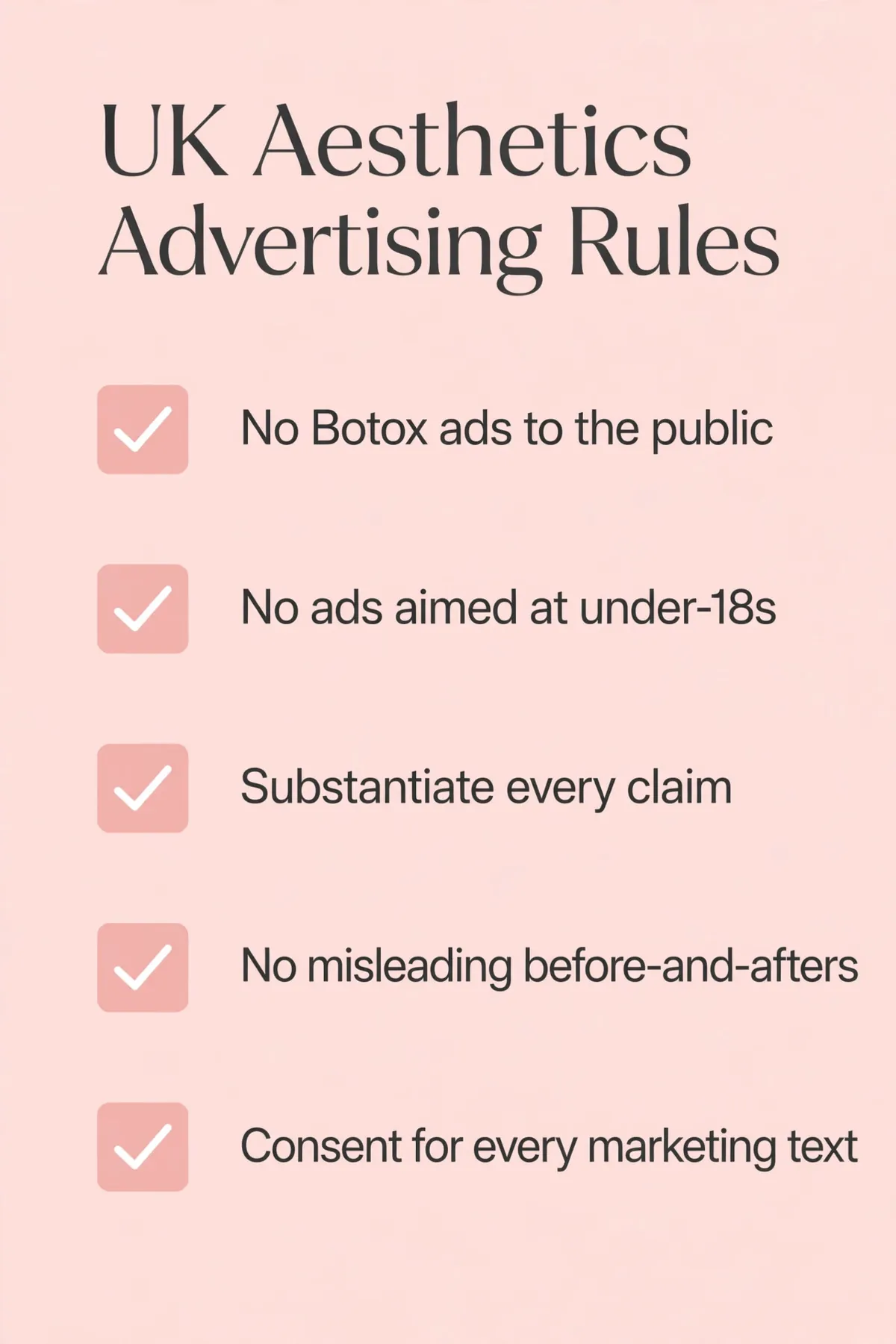
- UK rules come first: no Botox ads to the public, no cosmetic-intervention ads aimed at under-18s, and every claim must be substantiated.
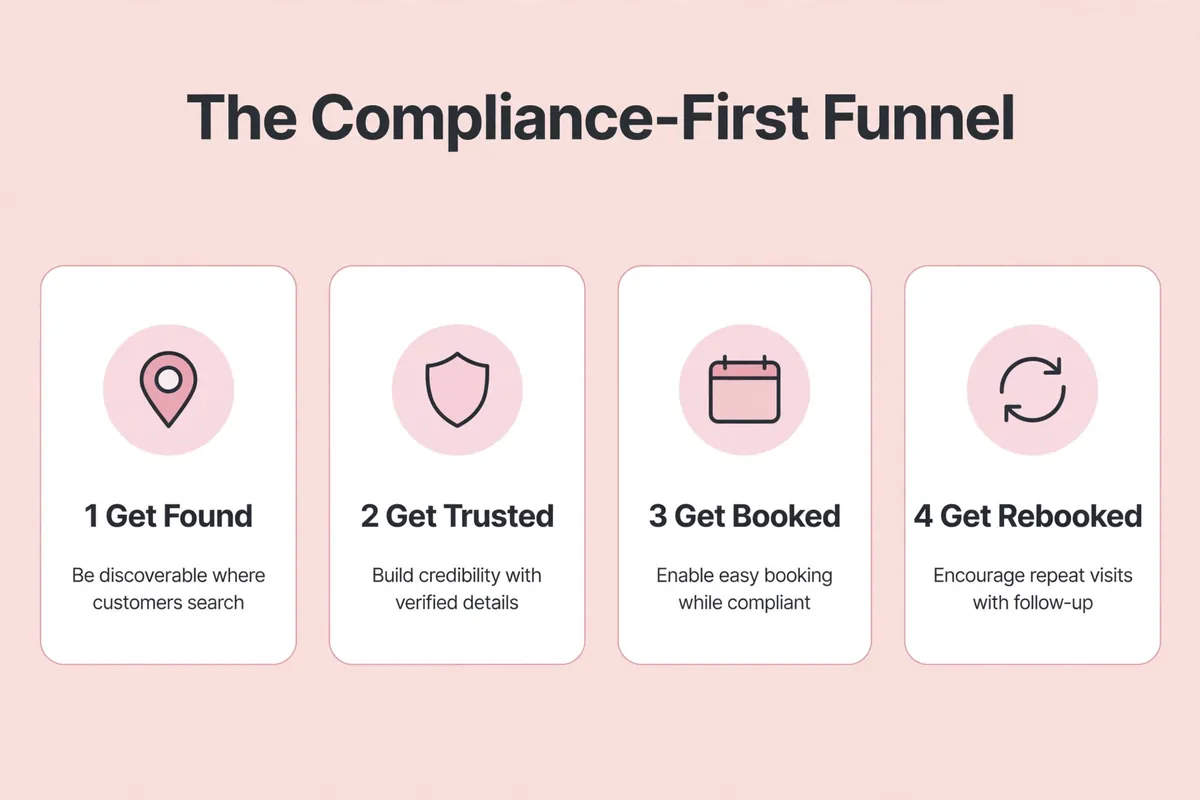
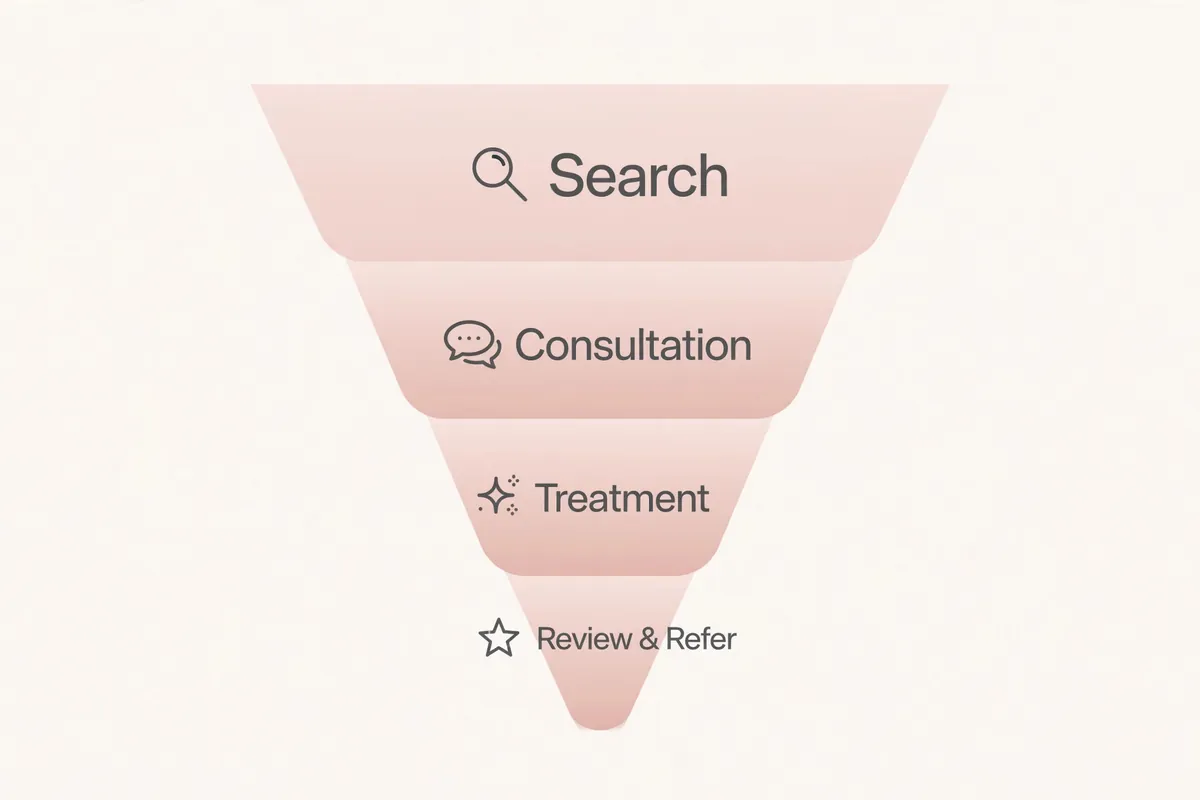
- Medical spa marketing works best as a compliance-first funnel: get found → get trusted → get booked → get rebooked.
- Med spa search marketing (Google Business Profile + treatment pages) beats social media for high-intent bookings.
- Sell the consultation, not the treatment, it is your highest-converting offer and it keeps your advertising compliant.
- Reviews, rebooking and PECR-compliant reminders compound everything else.
Not sure which of these rules apply to your clinic’s current ads? Book a free 30-minute strategy call, we will review your Google profile, website and Instagram and tell you what to fix first.
In this guide: The UK advertising rules · Get found · Get trusted · Get booked · Get rebooked · Costs · Mistakes · FAQ
Marketing for medical spa businesses: what actually works in the UK
Marketing a medical spa is not salon marketing with a fancier price list. Treatments cost hundreds of pounds, clients research for weeks, and the decision involves needles, lasers and their face. Trust is the product, and in the UK, the law shapes what you are allowed to say about it.
So the framework is different. Where a beauty salon can market “book now” offers freely, an aesthetics clinic markets a funnel:
- Get found, when someone searches “lip fillers Manchester” or “aesthetics clinic near me”, you appear.
- Get trusted, your website, reviews and content answer their questions before they ever call.
- Get booked, the consultation, not the treatment, is the conversion you optimise for.
- Get rebooked, reviews, reminders and treatment plans bring them back.
That middle step is the whole game. A consultation lets a qualified practitioner assess the client in person, which is also exactly what the advertising rules expect you to do. Market the consultation and compliance largely takes care of itself.
The UK advertising rules you must know first
Read this before you post anything. These rules are what separate UK aesthetics marketing from the American advice flooding your feed, and breaking them can get your ads banned and your name published in an ASA ruling.
You cannot advertise Botox to the public
Botox is a prescription-only medicine (POM) in the UK. Under MHRA and CAP rules, POMs may not be advertised to the general public, directly or indirectly. That means no public-facing posts, ads or website pages promoting Botox, anti-wrinkle injections, prices per area, or before-and-after photos of Botox results. One trade guide puts it plainly: it is illegal to promote it externally in any form of public-facing advertisement, including websites and social media accounts (Dentistry.co.uk).
What you can do: promote the consultation. “Book a consultation to discuss your treatment options” is compliant; “Botox £99, three areas” is not. Inside the clinic, during a genuine consultation, a prescriber can discuss and prescribe it, the restriction is on public advertising, not on clinical practice.
No cosmetic-intervention ads aimed at under-18s
Since May 2022, CAP Code rule 12.25 bans ads for cosmetic interventions from being directed at under-18s, including any media where under-18s make up more than 25% of the audience (ASA/CAP guidance). This covers dermal fillers, skin rejuvenation, laser treatments, chemical peels, microneedling and teeth whitening, among others.
In practice: set your paid social targeting to 18+, and think twice before running aesthetics ads on platforms or placements that skew very young. (Separately, it has been illegal since October 2021 to administer Botox or fillers to under-18s at all.)
Every claim must be provable
The ASA requires objective claims to be backed by evidence. For aesthetics clinics this means:
- Avoid absolutes you cannot prove: “permanent results”, “pain-free”, “guaranteed”.
- Before-and-after photos must not mislead, CAP advises caution with post-production and retouching on the area being advertised. Use consistent lighting, no filters on the treated area, and always have the client’s written consent.
- Discount claims must be genuine and substantiable, “was/now” prices you cannot evidence will get the ad banned.
This section is general information about UK advertising rules, not legal advice. For borderline campaigns, the ASA’s free Copy Advice service will check your ad before it runs.
Get found: med spa search marketing
When someone decides they want treatment, they search. Med spa search marketing, being visible on Google at that exact moment, is the highest-intent channel an aesthetics clinic has. Social media builds desire; Google captures it.
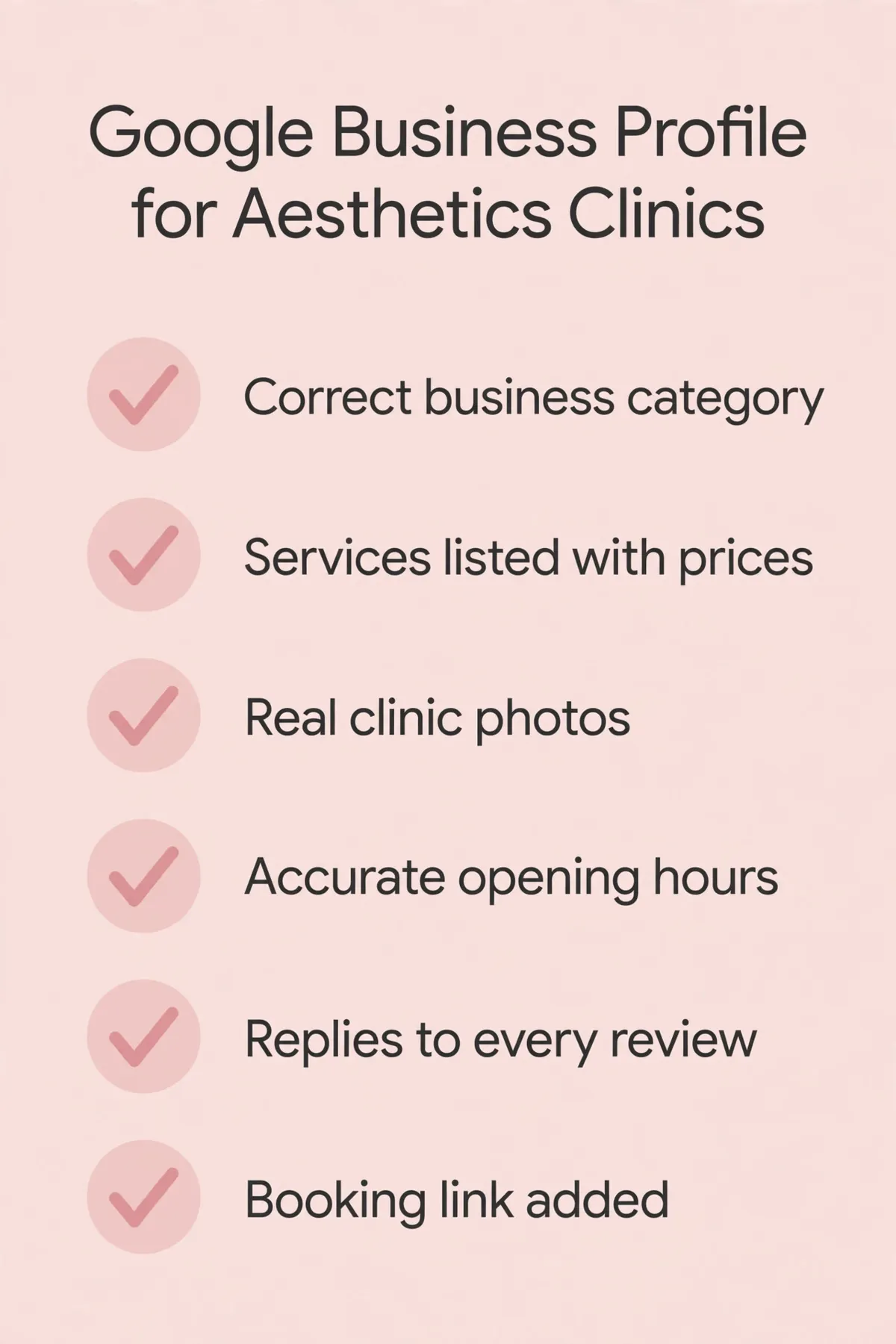
Your Google Business Profile
For “aesthetics clinic near me” searches, your Google Business Profile outranks your website. Set it up properly once and it books consultations for free:
- Use the most accurate primary category (Google offers “Medical spa” as a category).
- List services with starting prices, “Dermal fillers from £180” filters in serious enquirers.
- Add real photos of your clinic, treatment rooms and team, never stock images for a medical setting.
- Keep opening hours accurate, including consultation hours.
- Reply to every review within 48 hours, your replies are read by future clients, not just the reviewer.
- Add your booking link as the primary action button.
For the full walkthrough, see our guide to local SEO for salons, the same principles apply, with higher stakes.
Treatment pages that rank
One page per treatment, each targeting “[treatment] + [your city]”, “dermal fillers Leeds”, “laser hair removal Birmingham”. Each page needs: what the treatment does in plain English, who it suits, what happens at the appointment, honest FAQs (downtime, how long results last, who should avoid it), starting price, practitioner credentials, and one clear consultation booking button. Pages like this also feed Google’s local pack and give your ads somewhere compliant to land.
Get trusted: content and a website that answer questions
Nobody books a £250 treatment from a clinic they do not trust. Your content job is to answer every question a nervous first-timer has, before they ask it.
Answer questions in short videos. Film 60-second Reels on your phone: “What happens at an aesthetics consultation?”, “How long does lip filler actually last?”, “Who should not have this treatment?” One question, one honest answer. This content gets saved and shared, and it positions you as the careful practitioner, not the pushy one.
Show your credentials, not just your results. Practitioner qualifications, years of experience, professional registers (such as Save Face or the JCCP), insurance, and a real clinic address all belong on your website and your Instagram bio. For medical-adjacent services, these trust signals convert better than any offer.
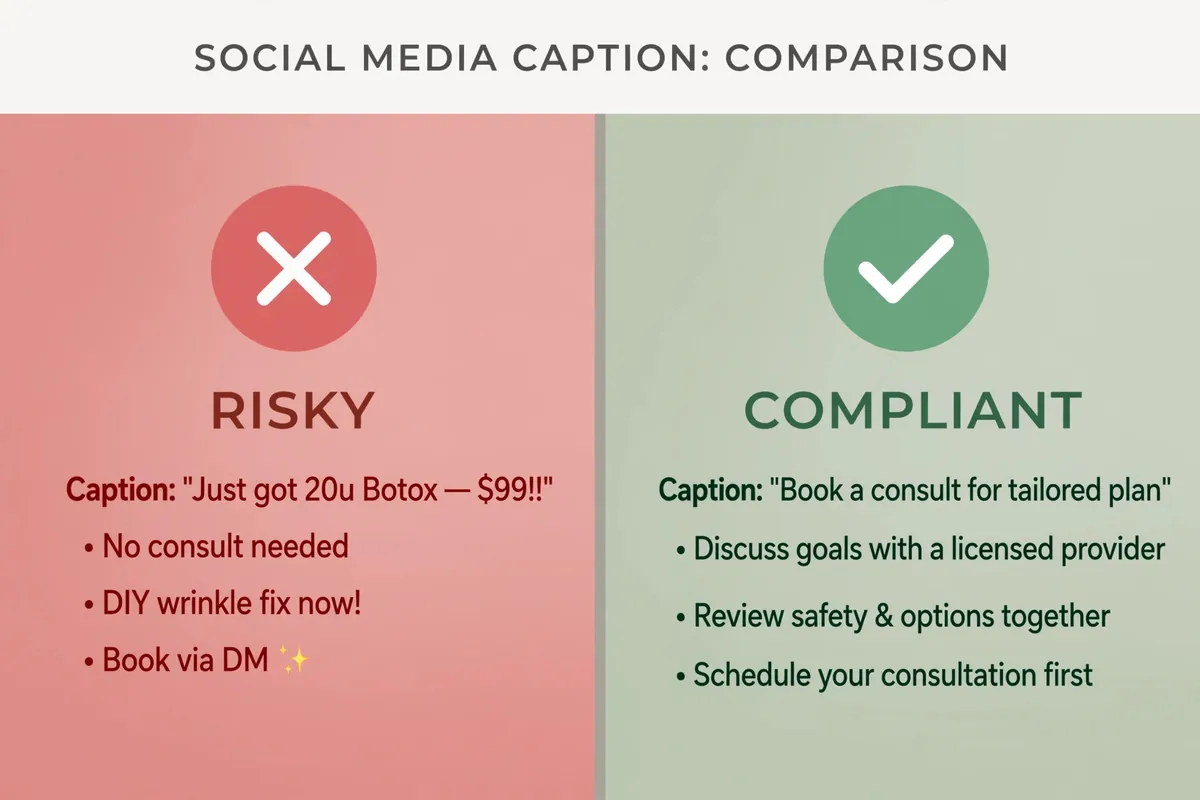
Rewrite your captions the compliant way. Compare these two:
Risky: “Botox £99!! Three areas, no consultation needed, DM to book ✨”
Compliant: “Considering treatment for forehead lines? Book a consultation and we’ll talk through your options, what’s suitable for you, and honest pricing, no pressure.”
The second version works because it sells the consultation, names no POM, makes no unprovable claim, and still tells the viewer exactly what to do next.
If keeping up this kind of content feels like a second job on top of clinic hours, our social media management for salons covers aesthetics clinics too, and if your site does not turn searches into consultation bookings, see what a website built to convert looks like.
Get booked: turning enquiries into consultations
Here is the uncomfortable truth about marketing medical spa treatments: most clinics do not have a traffic problem, they have a follow-up problem. Enquiries sit unanswered for days, and by the time someone calls back, the client has booked elsewhere.
Sell the consultation everywhere. Website hero, Instagram bio link, Google profile button, ad landing pages, all should offer a free or low-cost consultation, not the treatment itself. It is easier to say yes to, and it keeps every ad compliant.
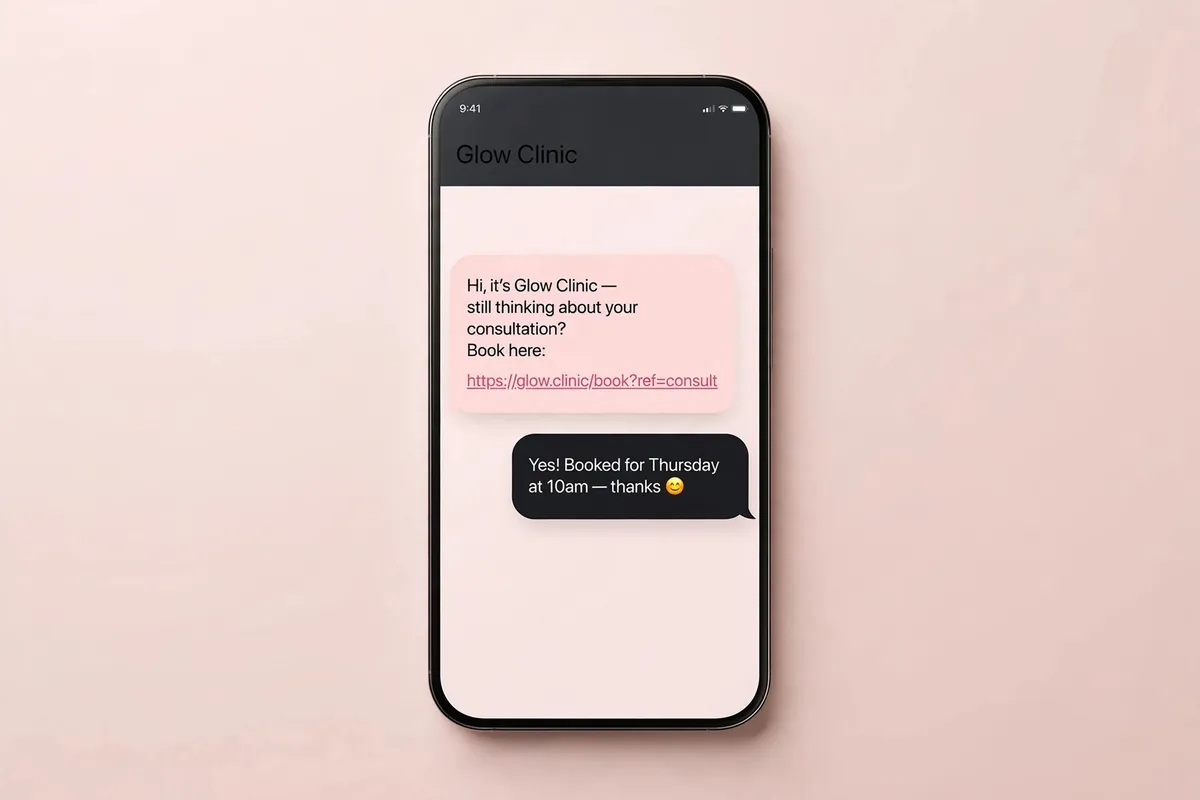
Respond fast, follow up twice. Aim to reply to every enquiry within the hour during working hours. Then follow up: most consultations are booked on the second or third touch, not the first. Copy and paste this:
Hi [name], it’s [your name] from [clinic]. You enquired about a consultation, happy to answer any questions, or you can pick a time here: [booking link]. No pressure either way.
Send it the next day if they have not booked, and once more a week later. That is it, persistent, not pushy.
Run paid search on your money treatments. Google Ads for “[treatment] near me” captures people ready to book. Keep ad copy compliant: advertise the consultation (“Free consultation, dermal fillers in Leeds”), never the POM, and send clicks to the matching treatment page. If paid social is new to you, our social media ads service runs compliant campaigns for beauty businesses, set age targeting to 18+ and keep the creative consultation-led.
Example (illustrative, not a client result): say 400 people a month search “lip fillers Manchester”. If your treatment page captures 25% of those clicks, that is 100 visits. If 5% book a consultation, that is 5 consultations; if 60% of consultations convert to treatment at £180 average, that is £540 a month from a single page. The maths shows why the consultation conversion rate matters more than traffic.
💬 Turn more enquiries into consultations
Most clinics lose bookings to slow follow-up, not to competitors. Book a free 30-minute strategy call and we will audit your enquiry journey, website, Google profile and Instagram, and show you where consultations are leaking.
Free, 30 minutes, no obligation. We reply within one working day.
Get rebooked: reviews, reminders and retention
Aesthetics is a repeat business, maintenance treatments, top-ups, treatment plans. Marketing for med spa growth is cheaper when existing clients come back and bring friends.
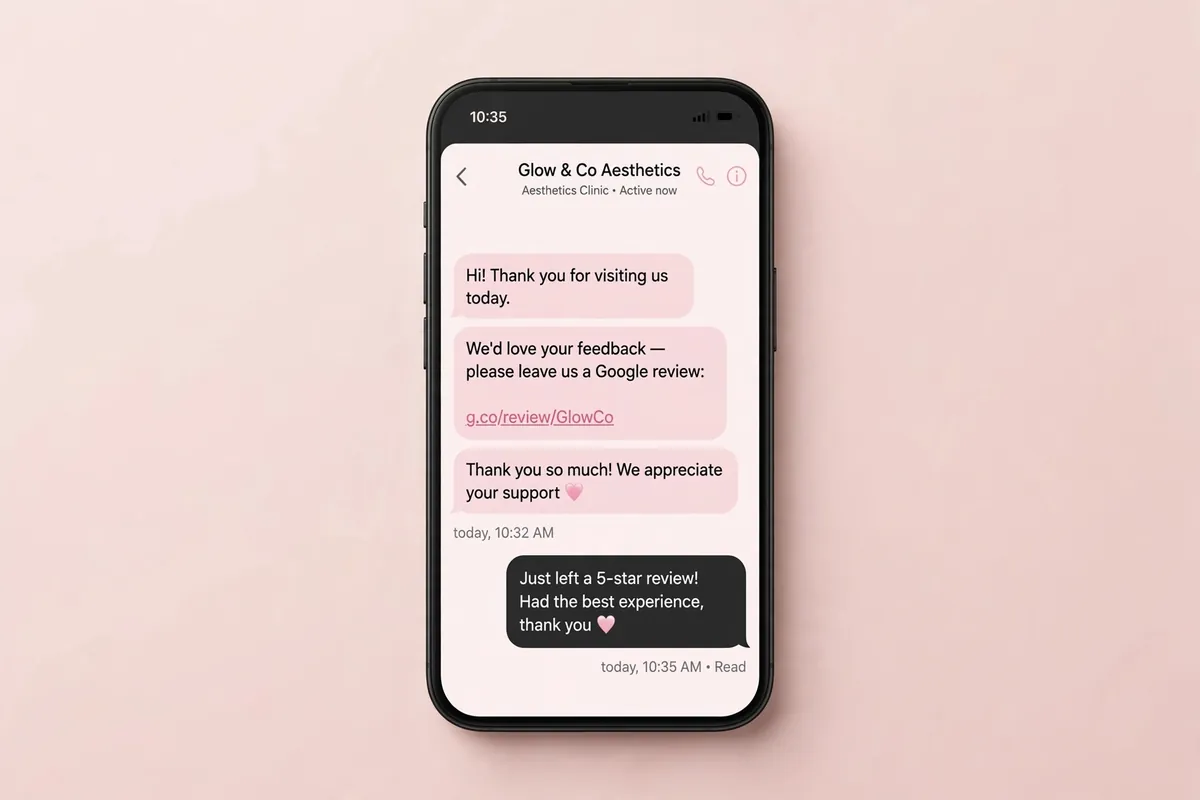
Build a review engine. Ask every happy client within 24 hours of their appointment, by text or WhatsApp:
Hi [name], thanks for coming in today. If you were happy with your visit, would you leave us a quick Google review? It really helps our clinic: [your review link]
Aim for a steady 2 to 3 new reviews a week. Reply to all of them, including the awkward ones, calmly and briefly.
Remind clients legally. Under PECR, the UK’s electronic marketing rules, you need consent (or the “soft opt-in” for existing clients) before sending marketing texts or emails, and every message must offer an opt-out. Collect consent at booking, keep it simple, and the ICO’s direct marketing guidance explains the detail. This is general information, not legal advice. If reviews are the part you never get round to, our reputation management service runs the whole system for you.
Sell the plan, not just the appointment. At the consultation, map out the treatment plan, “three sessions, six weeks apart, then a maintenance top-up every nine months”, and offer to schedule the next visit before they leave. A client with a plan is a client who rebooks.
Medical spa marketing costs: an honest breakdown
There is no single right budget, but there are honest ranges. Treat these as typical UK market costs, not quotes, get proper quotes before you commit.
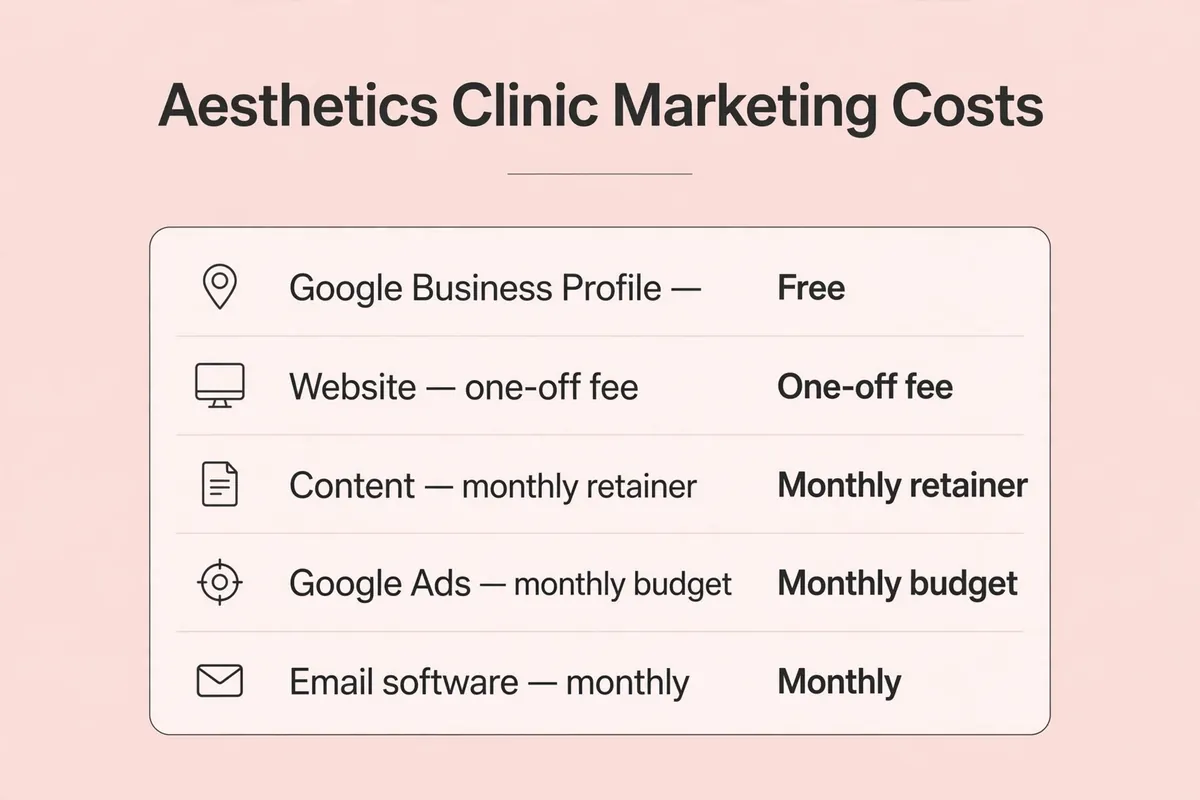
| Channel | Typical cost | Time to set up |
|---|---|---|
| Google Business Profile | Free | 1 to 2 hours |
| Website (booking-focused) | £1,500 to £5,000 one-off | 3 to 6 weeks |
| Content (done for you) | £300 to £800/month | 1 to 2 weeks |
| Google Ads budget | £500 to £2,000/month | 1 week |
| Email/SMS software | £20 to £50/month | 1 to 2 hours |
| Review system | Free to £50/month | 1 hour |
Start free, then spend on what you can measure. A tracked ad with a consultation booking link will teach you your cost per consultation within a month, that number, not clicks or followers, is the one to optimise.
Where should you start?
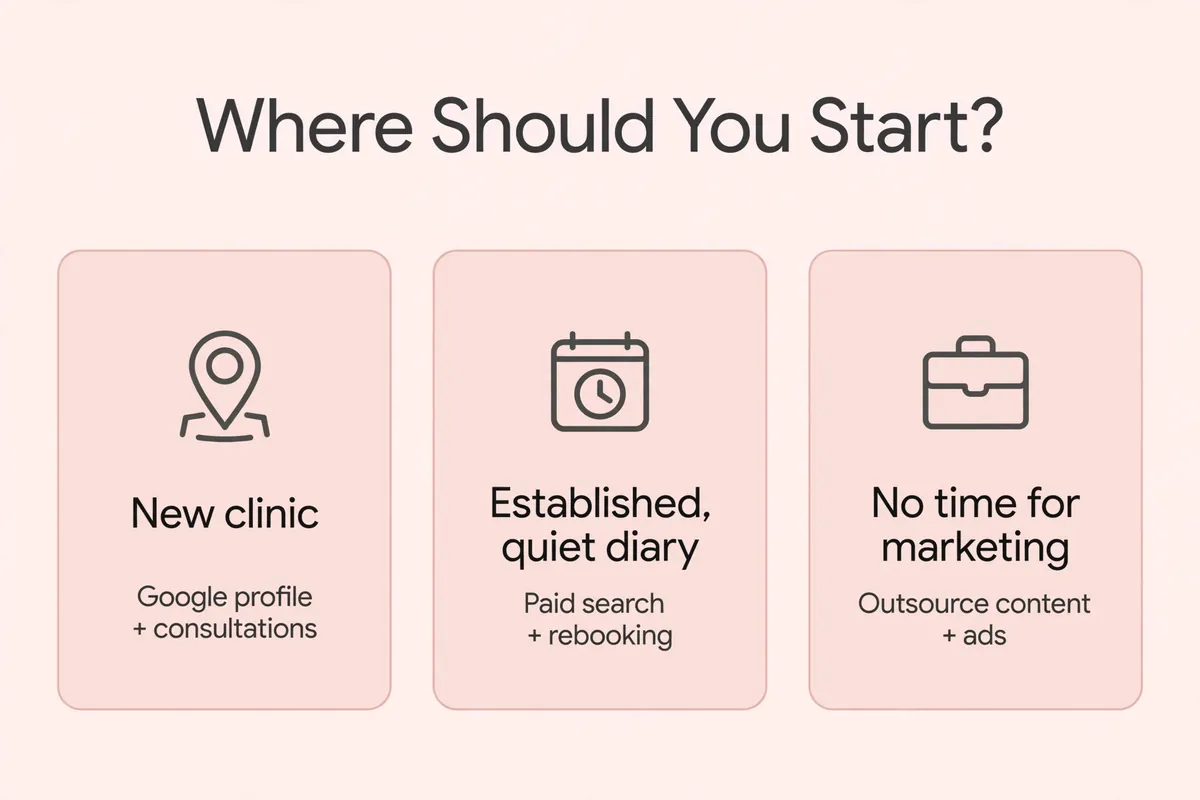
| Your situation | Start with |
|---|---|
| New clinic, few reviews | Google Business Profile + free consultations + review engine |
| Established but diary is quiet | Google Ads on top treatments + enquiry follow-up system |
| Busy but want higher-value clients | Treatment pages + educational content + credentials |
| No time for marketing at all | Outsource content and ads; keep consultations in-house |
5 mistakes that cost aesthetics clinics bookings
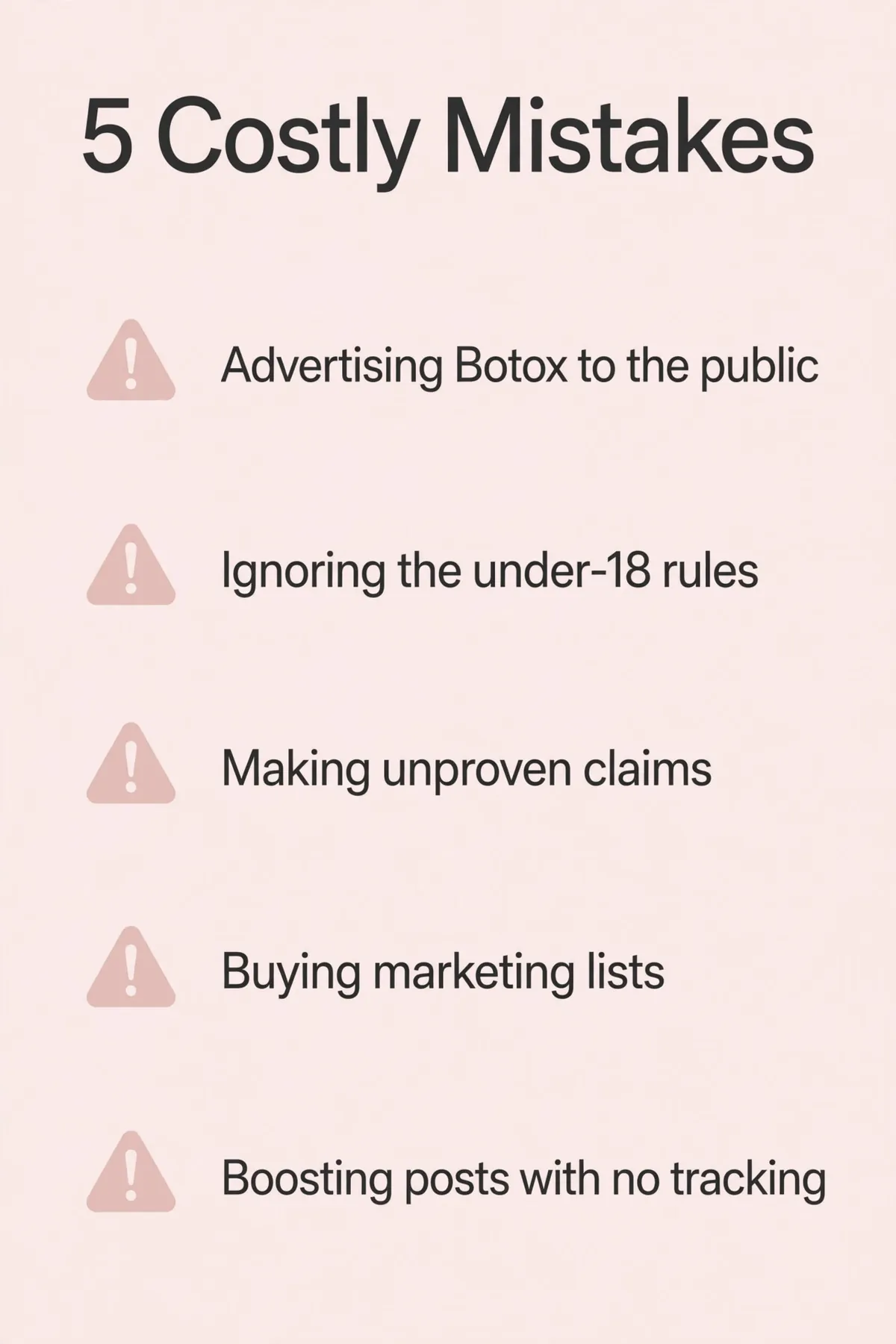
- Advertising Botox to the public. It is the most common breach we see, price lists for “anti-wrinkle injections” on Instagram, before-and-afters of Botox results. One ASA complaint can mean the ad is banned and the ruling published under your clinic’s name.
- Ignoring the under-18 rules. Running aesthetics ads with default age targeting can put your ads in front of under-18s. Set 18+ on every paid campaign and avoid placements that skew young.
- Making claims you cannot prove. “Permanent”, “pain-free” and “guaranteed results” all need robust evidence you almost certainly do not hold. Describe honestly instead: what the treatment does, how long results typically last, who it suits.
- Buying a marketing list and texting it. Bought lists almost never carry the specific consent PECR requires. Build your own list from real clients, with consent recorded at booking.
- Boosting posts with no tracking. If you cannot say what one consultation cost you, you cannot say the ad worked. Set a budget, a deadline and a tracked booking link, or do not run it.
Frequently asked questions
What is the most effective marketing for a medical spa in the UK?
The combination of Google visibility (a complete Business Profile plus one ranking page per treatment), a consultation-led website, fast enquiry follow-up, and a steady review engine. Paid search accelerates it once the foundations exist. Social media supports trust but rarely drives bookings alone for high-ticket treatments. (46 words)
Can I advertise Botox on Instagram in the UK?
No. Botox is a prescription-only medicine, and UK rules ban advertising POMs to the public, directly or indirectly. That includes posts, Stories, prices and before-and-after photos. You can promote consultations where treatment options are discussed privately with a prescriber. This is general information, not legal advice. (46 words)
How much should an aesthetics clinic spend on marketing?
Start with the free foundations: your Google Business Profile, review requests and enquiry follow-up cost nothing but time. When you spend, budget £500 to £2,000 a month for Google Ads once you can track cost per consultation, and treat content or agency help as a monthly investment you review quarterly against bookings. (50 words)
Do before-and-after photos work for marketing a medical spa?
Yes, but with rules: always get written client consent, keep lighting and angles consistent, and do not retouch the treated area, CAP warns against post-production that misleads. Never post before-and-afters of Botox or other prescription-only treatments publicly, as that counts as indirect advertising. (43 words)
How do medical spas get clients from Google?
Through local search: a complete Google Business Profile with services, prices, photos and recent reviews, plus one dedicated page per treatment targeting “[treatment] + [city]”. Most high-intent clients search, compare two or three clinics, then book a consultation, so your reviews and treatment pages do the selling. (47 words)
The bottom line
Marketing for medical spa growth in the UK is a compliance-first game: know what you can legally say, get found where clients search, earn trust with honest content, convert enquiries into consultations, and bring clients back with reviews and reminders. Do those five things and the diary fills without a single risky ad.
If you want a second pair of eyes on it, your ads, your Google profile, your follow-up, book a free 30-minute strategy call.
Free, 30 minutes, no obligation. We reply within one working day.
Last updated: October 2026